A wardrobe of muted colors can be wonderfully easy to combine, yet an outfit made entirely of similar beige pieces may feel unfinished. Exploring Soft Natural and Soft Autumn together is useful when you want relaxed clothing, gentle warmth and enough definition to see the outfit clearly. Treat the names as prompts for trying clothes, not as obligations. You can test color, texture and fit one at a time and keep whatever makes an ordinary day more comfortable.
Choose muted warmth without making everything the same
Soft Autumn is commonly described in seasonal color systems through muted, warm leaning colors. Soft Natural belongs to a different style framework and is often explored through easy shapes and fabric movement. Neither system is a medical or scientific assessment, and this combination does not come with a single official wardrobe. A useful soft natural soft autumn outfit is one you like wearing, with choices you can explain through the clothes themselves.
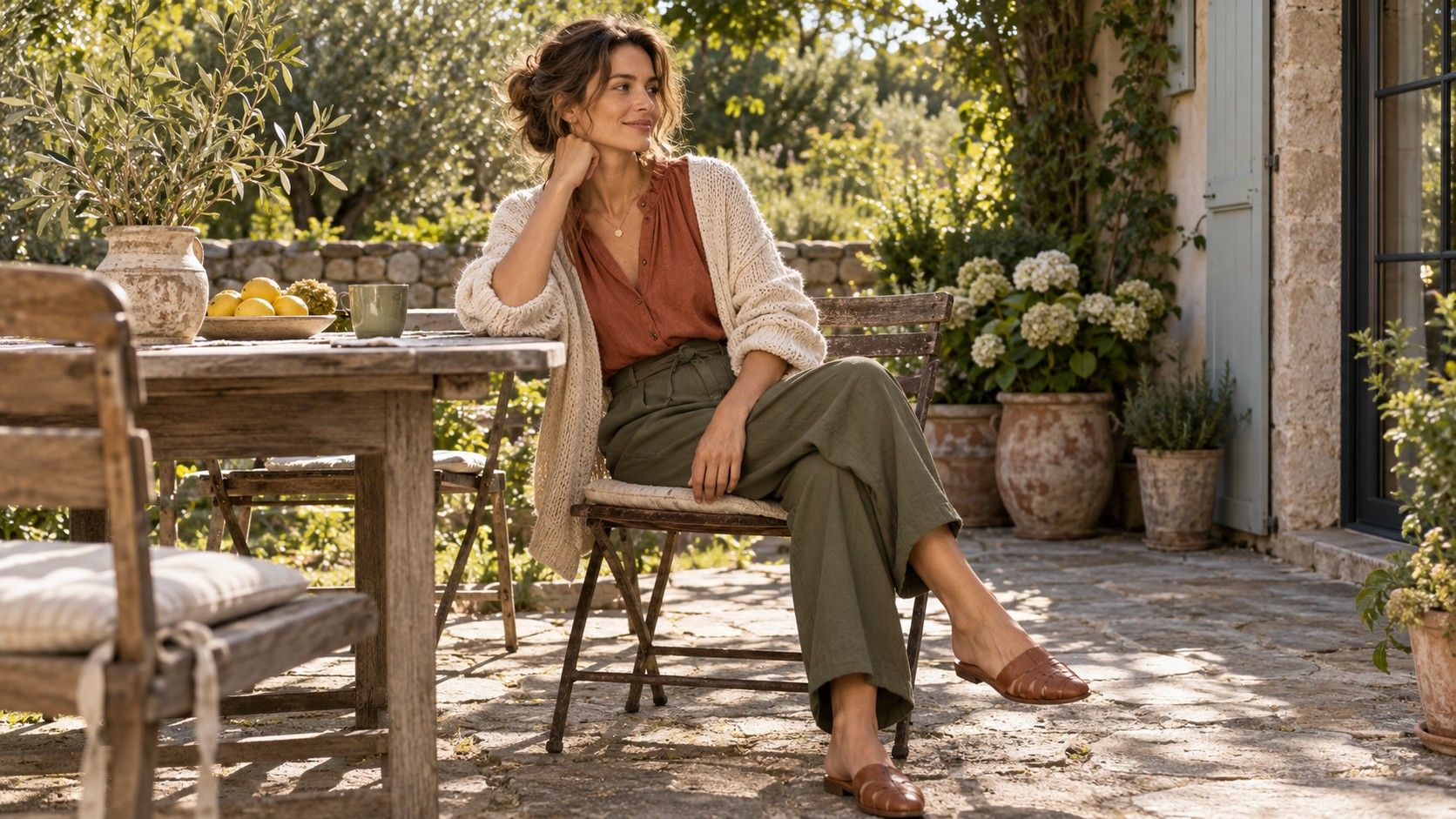
Begin with two colors you already own. Olive and cream, warm taupe and faded terracotta, or a subdued teal with brown can offer a workable starting point. These color names cover a broad range of actual shades. Hold the real pieces together: a cream with a yellow cast may behave quite differently from a cooler off white, while two garments called olive may look unrelated.
If an outfit feels indistinct, add a small difference in depth before reaching for a brighter color. A medium brown belt against taupe trousers may provide enough separation. A darker cardigan over a light top does the same over a larger area. This is a question of the effect you want, not a requirement to produce a particular contrast level around your face.
To compare colors near the face, use a window and avoid direct sun. Put a warm muted fabric beside a cooler one of similar depth, then change only that fabric. Notice what feels pleasant to you rather than hunting for a dramatic transformation. Phone processing, dyed hair and surrounding colors all influence the impression. A single photograph is a weak reason to replace a wardrobe.
Put texture where the outfit needs interest
Texture can distinguish neighboring colors without adding a loud pattern. Try an olive cotton shirt beside brown trousers with a subtle weave, or a smooth cream top below an open cardigan. The pieces can share a quiet palette while remaining visibly separate. Look at them from a few steps away; a texture you love close up may disappear at normal conversational distance.
Soft to the touch and soft in outline are different things. A thick brushed knit might stand away from the body, while a smooth woven blouse can fall gently. Scrunch a little fabric in your hand if the shop allows it, then release it. More usefully, try on the finished garment and move. Does the hem settle after sitting? Do the sleeves slide comfortably under your outer layer?
I would keep the first texture experiment simple: one visibly textured item beside two quieter pieces. A ribbed cardigan, plain top and smooth trousers show you what the cardigan contributes. If every garment has a strong texture, the result may be exactly what you like, but it becomes harder to identify why a combination feels busy or heavy.
Check care requirements before deciding that a fabric is practical. A delicate open knit that catches on a work bag may get little use. Linen that creases may be perfectly welcome if you enjoy that appearance; if you spend the day trying to smooth it, another material may suit you better. Comfort includes how much attention the garment demands after leaving home.
Make an easy shape look chosen
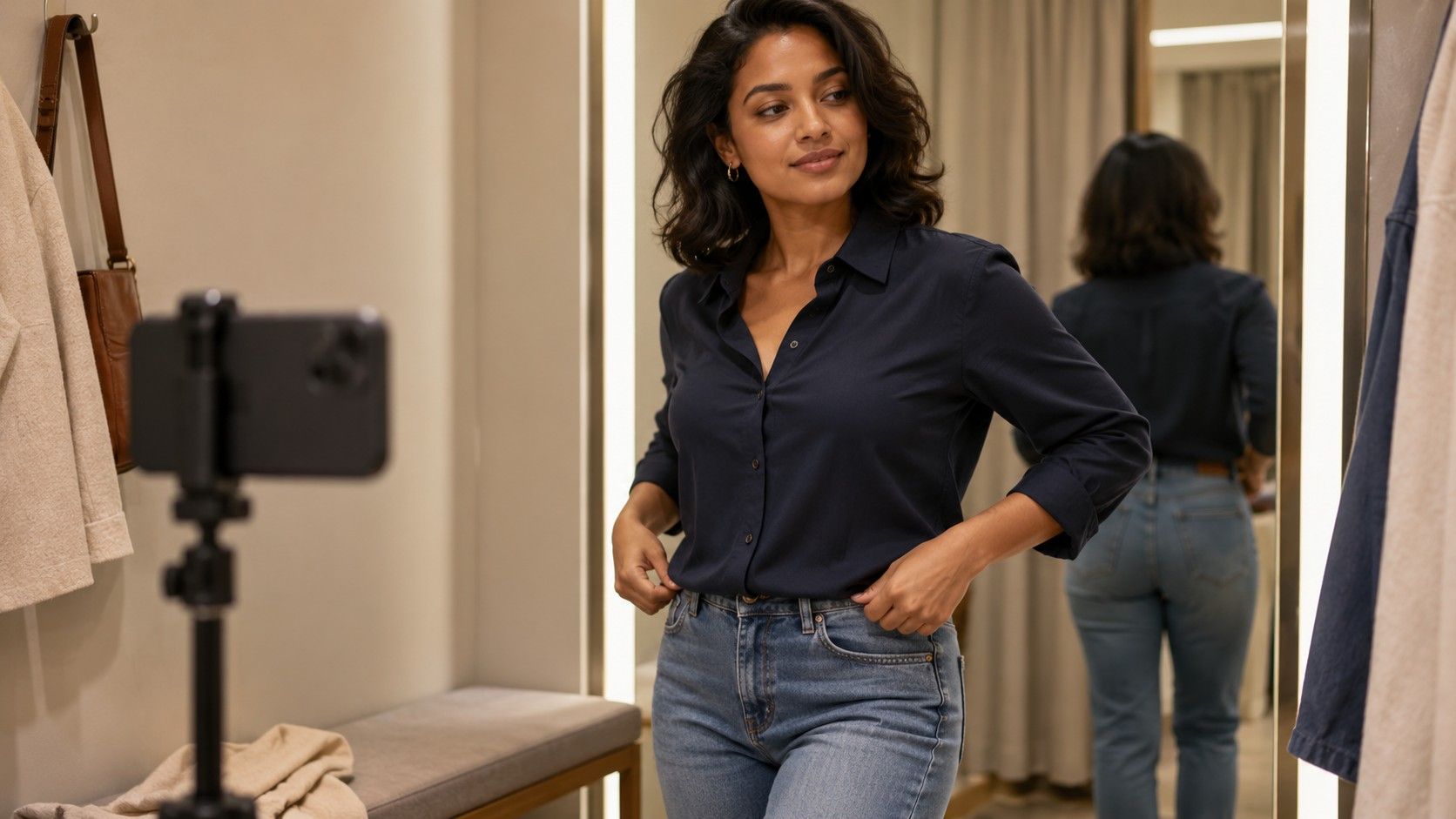
Relaxed clothing does not have to mean adding room everywhere. Try an easy blouse with straight trousers, then compare it with a roomier trouser. You may prefer both, but the outline will differ. Use the same shoes and take a full length photo of each version. It is easier to make a decision when you are looking at a specific change rather than asking whether an outfit follows a label.
A partial tuck can shorten the visible top and reveal a waistband, but it is only one tool. A naturally shorter hem, an open shirt over a tank or a longer top with a side opening may produce the balance you enjoy with less adjustment. Sit down after arranging the tuck. If it repeatedly pulls out or bunches, the supposedly easy detail is creating extra work.
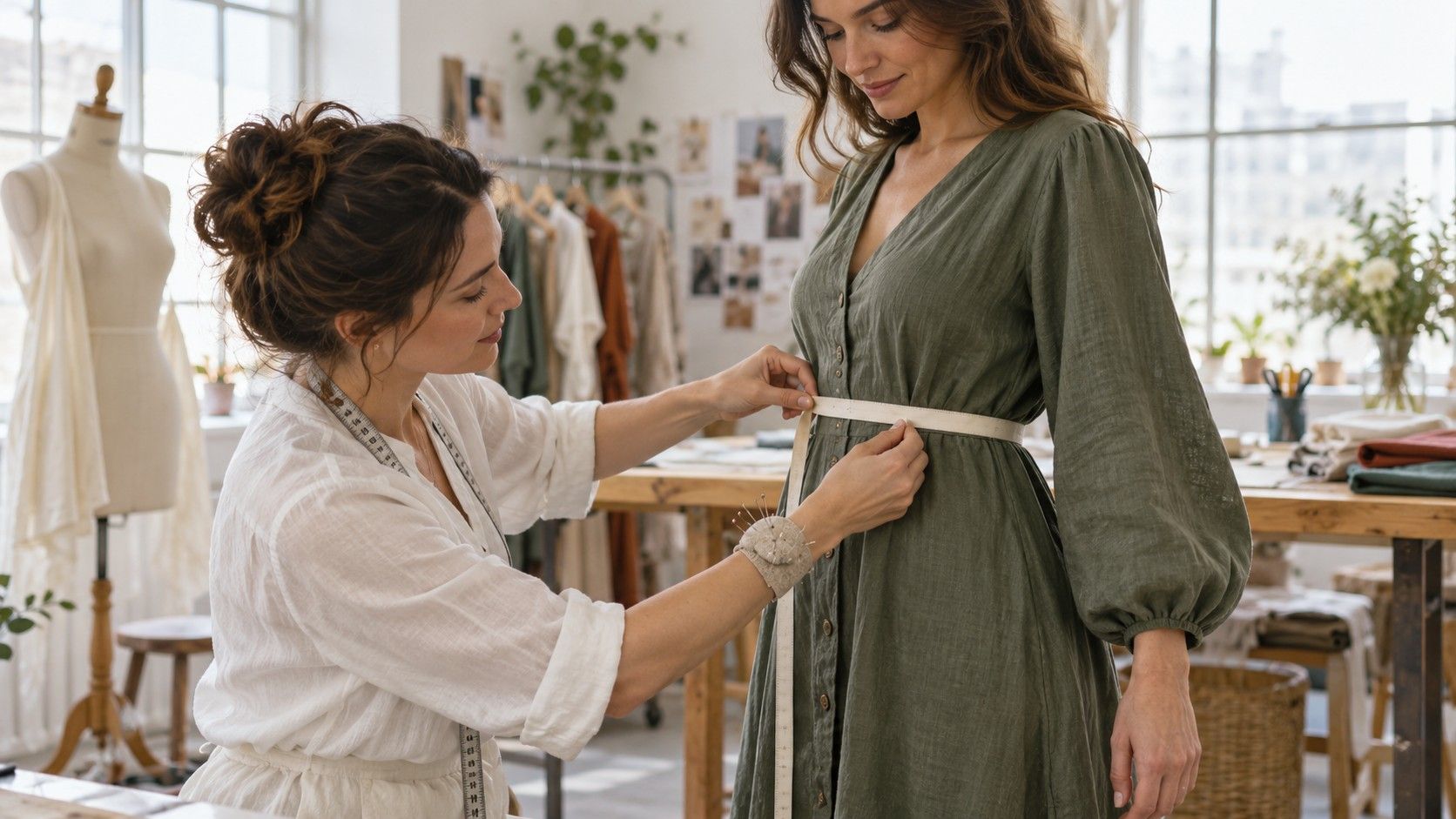
Look at fit before evaluating the style idea. A button placket that pulls, sleeves that prevent reaching or a waistband that digs in are useful clues about the garment. Try another size or cut. You do not need to change your body or reinterpret an identity to make a poorly fitting shirt acceptable. Slight alterations can help, though they are worth pricing before purchase.
Necklines also change the arrangement. Compare a crew neck, an open collar and a shallow V if you already have them. A necklace or scarf can occupy the open area, so test the neckline with the accessories you use. There is no single required amount of skin to show. Choose something that stays where you want it when you bend, move and carry a bag.
Build a small palette around real laundry and outfits
Choose two familiar base colors and two accents before adding more. For example, brown and warm taupe could support muted teal and terracotta. Add a light neutral if you often want a lighter area near the face. The goal is a small group of garments that combine in your actual wardrobe, rather than a perfect row of swatches that leaves you missing trousers or comfortable shoes.
Lay out three complete combinations, including shoes and outerwear. If a new top only works with trousers you do not own, it creates another purchase rather than solving a dressing problem.
Adjust the same idea for work and cool weather
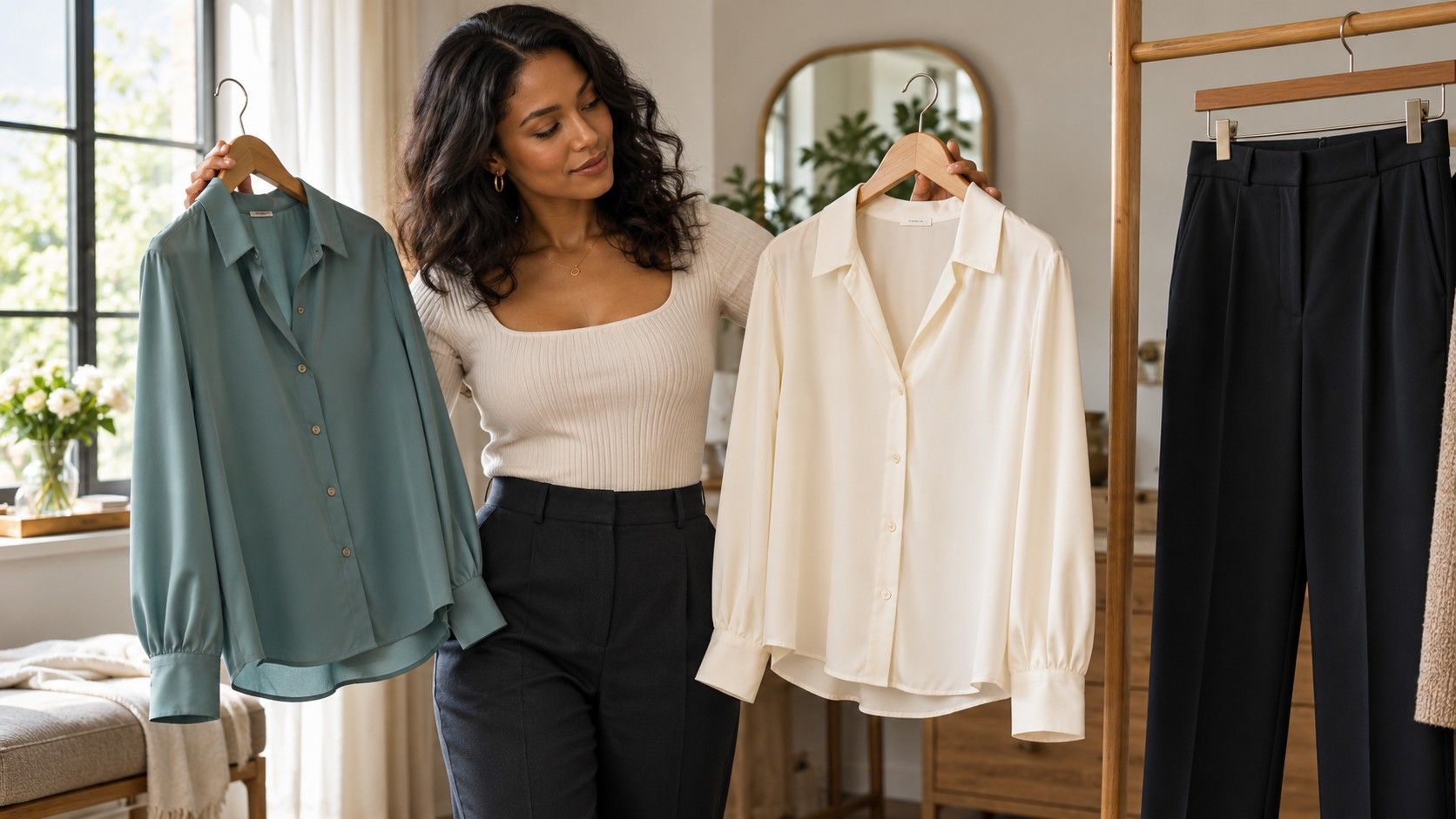
For a workplace with a fairly formal dress code, try a soft blouse under a blazer with comfortable shoulder and arm movement. Warm taupe trousers and a muted teal blouse can feel considered without a complicated arrangement. The jacket may be more structured than the other pieces; that can suit the setting. Check the total outfit against the actual dress code instead of making every item serve a style identity.
In a casual setting, an olive overshirt, cream T shirt and brown trousers can do similar work. The overshirt adds an open vertical boundary and an extra texture. If its pockets or cuffs feel bulky under a coat, choose a thinner layer or wear it as the outer layer when weather permits. Useful layering leaves room for movement rather than relying on a pleasing photo.
For colder days, try the coat over the full combination you intend to wear. Reach forward and sit if possible. A thick cardigan plus a close fitting coat may restrict the arms, even when both garments fit separately. Consider a thinner warm layer or a roomier coat before assuming the entire outfit shape is wrong.
Muted warmth does not forbid dark winter clothing. A brown or charcoal coat you already own can sit over a quieter palette, and a scarf can connect the colors if you enjoy that detail. Try folding the scarf in two different widths; the amount of fabric around the neckline can change the result more than buying a new shade.
Keep the combinations that work after a full day
Give a promising outfit a trial on an ordinary day before treating it as a formula. Walk, sit and use your usual bag. Notice whether the knit catches, the blouse needs straightening or the trousers feel comfortable after lunch. Those details tell you what to adjust. They do not say anything about whether your body belongs in a style category.
Look at the outfit once in daylight and once in the light where you spend most of your time. A muted teal can look greener under a warm lamp, and neighboring brown shades may become difficult to distinguish indoors. You do not need them to behave identically everywhere. You simply want a combination you like in the settings where you wear it.
After a few trials, keep a short note of what worked: an open collar with a light knit, olive beside cream, or straight trousers with a softly falling blouse. Keep the note specific enough to reuse. If another favorite outfit has a bright color or a crisp jacket, there is no conflict to resolve. A style system is most helpful when it gives you ideas, while your own wardrobe supplies the evidence.