An AI body type analysis can return a confident label from a photograph that took seconds to upload. The useful question is what that result helps you do next. A picture may support an outfit experiment, but it cannot show how a waistband feels after lunch or how a sleeve moves when you reach. Before treating the answer as a shopping instruction, check the image, understand the service's privacy choices and turn its suggestion into a small test with clothes you already own.
Choose a wardrobe question before choosing a tool
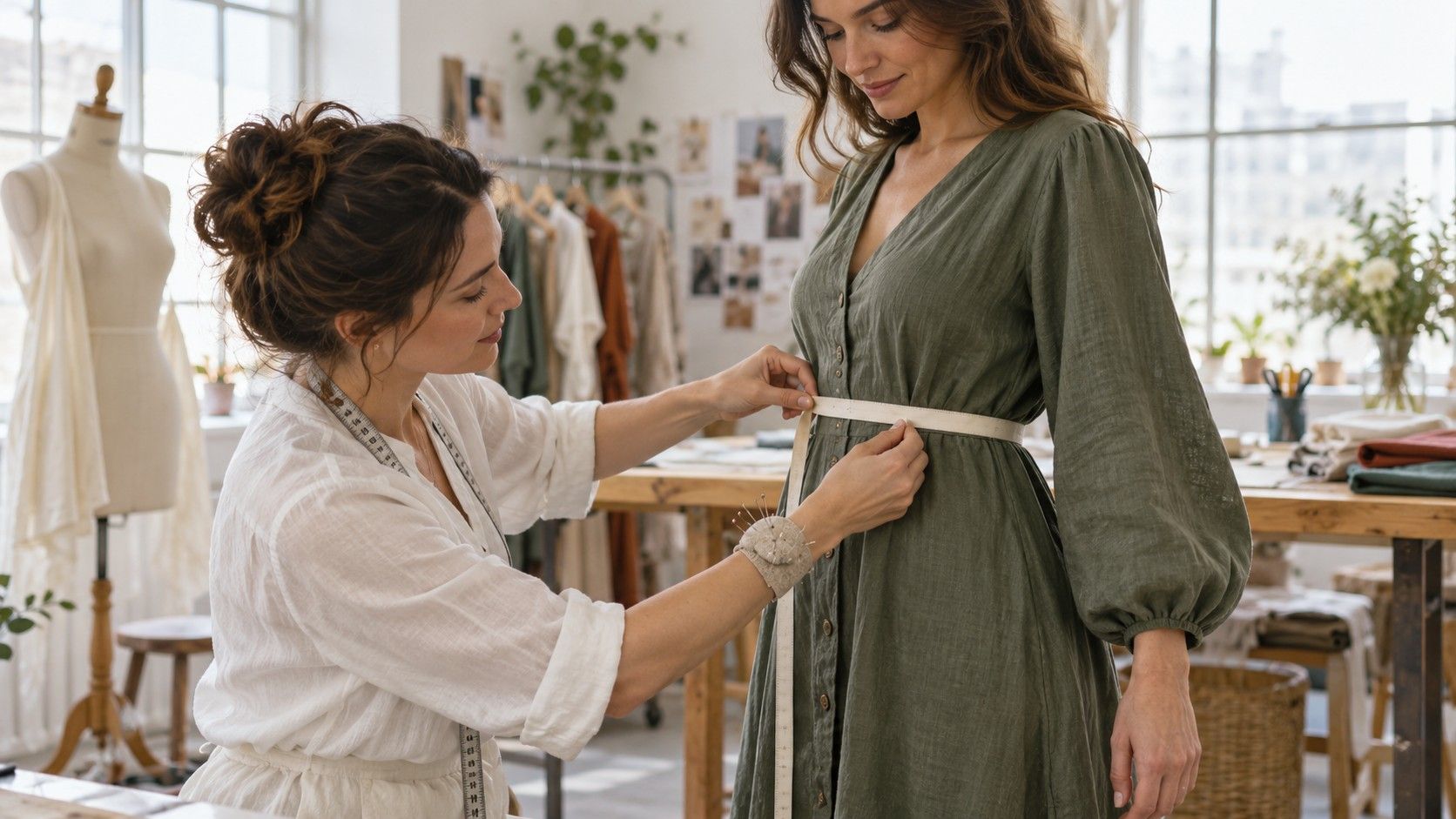
“Tell me my body type” sounds specific, but it leaves the intended decision open. Are you trying to find trousers that sit comfortably, compare jacket lengths, or decide which colors you enjoy near your face? Those require different information. A photograph can record an outfit's appearance from a particular view. A fitting check needs movement, dimensions and the actual garment. A color comparison needs reasonably consistent lighting and a clear understanding of the colors being compared.
Searching for AI fashion recommendation, body shape and color analysis images often puts all three tasks into the same stream of results. Keep them separate when evaluating a service. A tool that describes the outline visible in one image has not thereby established a personal style identity or a seasonal palette. Ask what the output actually contains: a descriptive observation, a category, a list of products or an explanation you can test.
I would start with a narrow question such as whether a shorter jacket works better with a particular skirt. You can compare two outfits without needing a permanent label. If a tool only accepts a full-body upload and returns a broad category, decide whether that exchange is worthwhile for your question. Sometimes a mirror, a measuring tape or a second photograph provides the useful information with less effort.
Check what the camera has changed
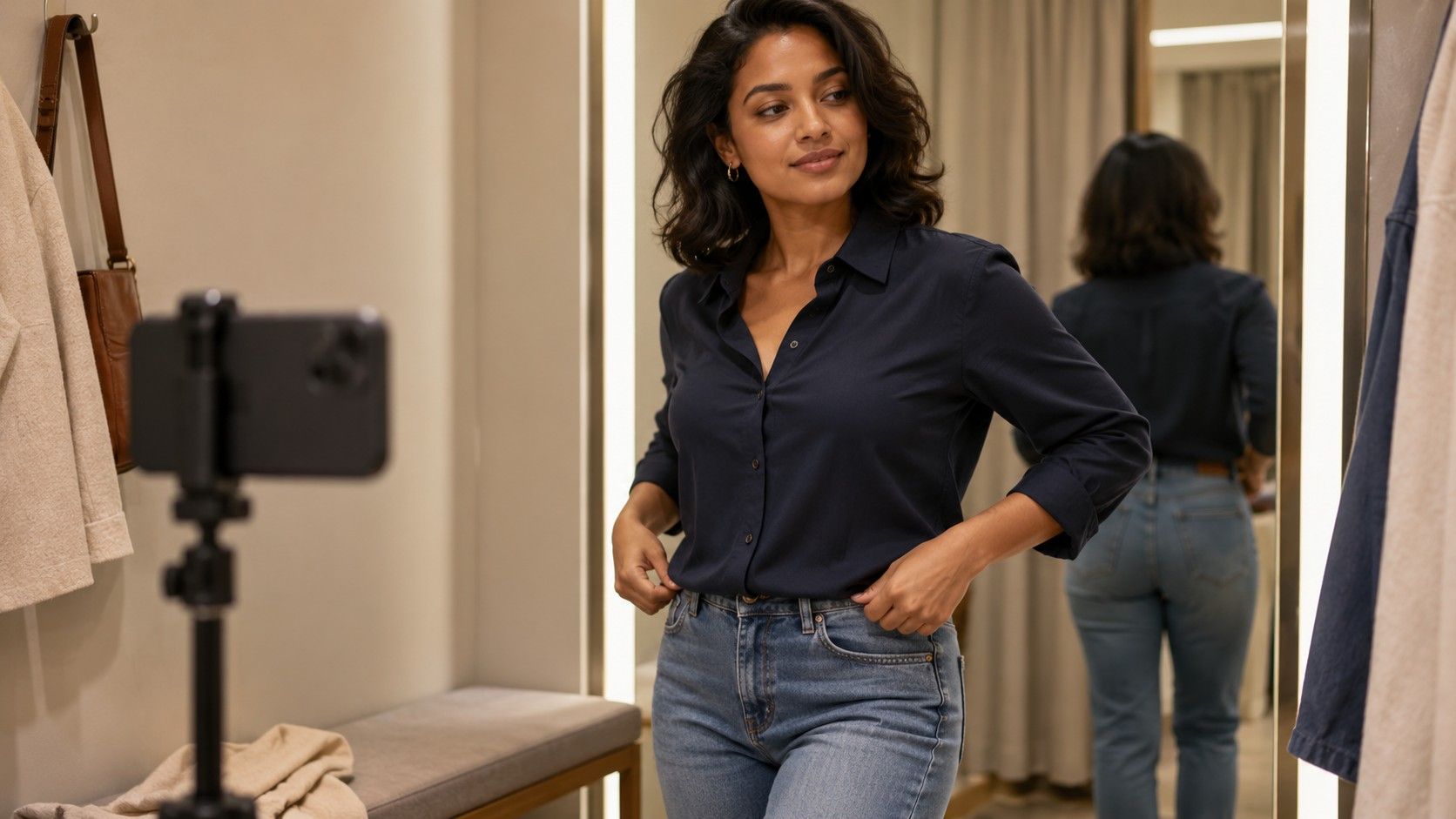
A photograph is a view made from a position, not a neutral measurement sheet. Camera distance, height and angle affect how proportions appear. If the phone is close to one part of the body, that part can look more prominent relative to parts farther away. A tilted camera changes the view again. Comparing a close mirror selfie with a more distant photograph can therefore produce different impressions without anything about your body changing.
For an outfit comparison, use the same camera position and keep the lens approximately level. Mark a place to stand and use a timer if that helps. Avoid switching between different lenses or framing one outfit from much closer. The aim is a consistent record you can compare, rather than a photograph that proves an exact body category. Do not stretch or compress the image to fit an upload box.
Clothes add another layer of uncertainty. A padded shoulder, a gathered skirt or a loose overshirt changes the outline the software can see. A pose can hide a seam or put one hip closer to the camera. If a tool requires clothing or poses that make you uncomfortable, you can stop. You do not owe a service a more revealing photograph to obtain a wardrobe suggestion.
Color has its own camera problem. Indoor bulbs, window light, exposure adjustments and screen settings can change the colors you see. A warm-looking face in one image does not establish a warm palette. If you are comparing garments, keep the light and camera settings as consistent as practical, then check the real colors in person. A result based on an edited or strongly filtered picture deserves particular caution.
Read the privacy terms before selecting an image
Before uploading, find out who operates the service and what it says about photographs. Look for clear information about storage, deletion, sharing and whether uploads may be used to improve or train systems. Check whether creating an account is necessary and whether deleting that account also deletes the images. If these points are unclear, treat the missing information as a reason to pause rather than assuming an upload disappears after analysis.
Use an image that contains only what the task needs. Remove other people from the frame and check the background for addresses, work badges, documents or personal screens. A crop may remove unnecessary context, although it may also change what an analysis can assess. You should be able to choose privacy over a more detailed result. Avoid uploading someone else's photograph without their agreement.
Photographs can contain information beyond the visible scene. Review the file details and use the sharing or export options available on your device to limit location information where appropriate. Do not assume that cropping the picture removes every piece of embedded information. Nor does removing location details make a recognizable photograph anonymous. Choose the service and the image with that distinction in mind.
Keep a record of the settings you chose and the deletion instructions if you decide to proceed. Afterwards, use any available deletion controls and read the confirmation carefully. A button press does not tell you more than the service confirms. You do not need to test several sites with the same photograph simply because the first result feels uncertain; every extra upload is another privacy decision.
Turn the result into a small clothing experiment
A recommendation becomes useful when you can translate it into an observable change. “Try a shorter top with these trousers” is testable. “Dress for your true type” is too vague until it specifies a garment feature and a purpose. Keep the original outfit available, change one element and compare the results in the same conditions. Then wear the preferred version while sitting, walking and carrying your normal bag.
| A tool suggests | A practical trial | What the trial cannot establish |
|---|---|---|
| A different top length | Fold or tuck the existing top and compare it with the same trousers | A permanent body category |
| More waist shaping | Compare a loose version with a comfortable tie or shaped garment | That your waist needs to look smaller |
| A softer fabric | Compare two similar garments while reaching and sitting | That every structured garment will fail |
| A different neckline | Try a familiar alternative with the same underlayer | A style identity based on one feature |
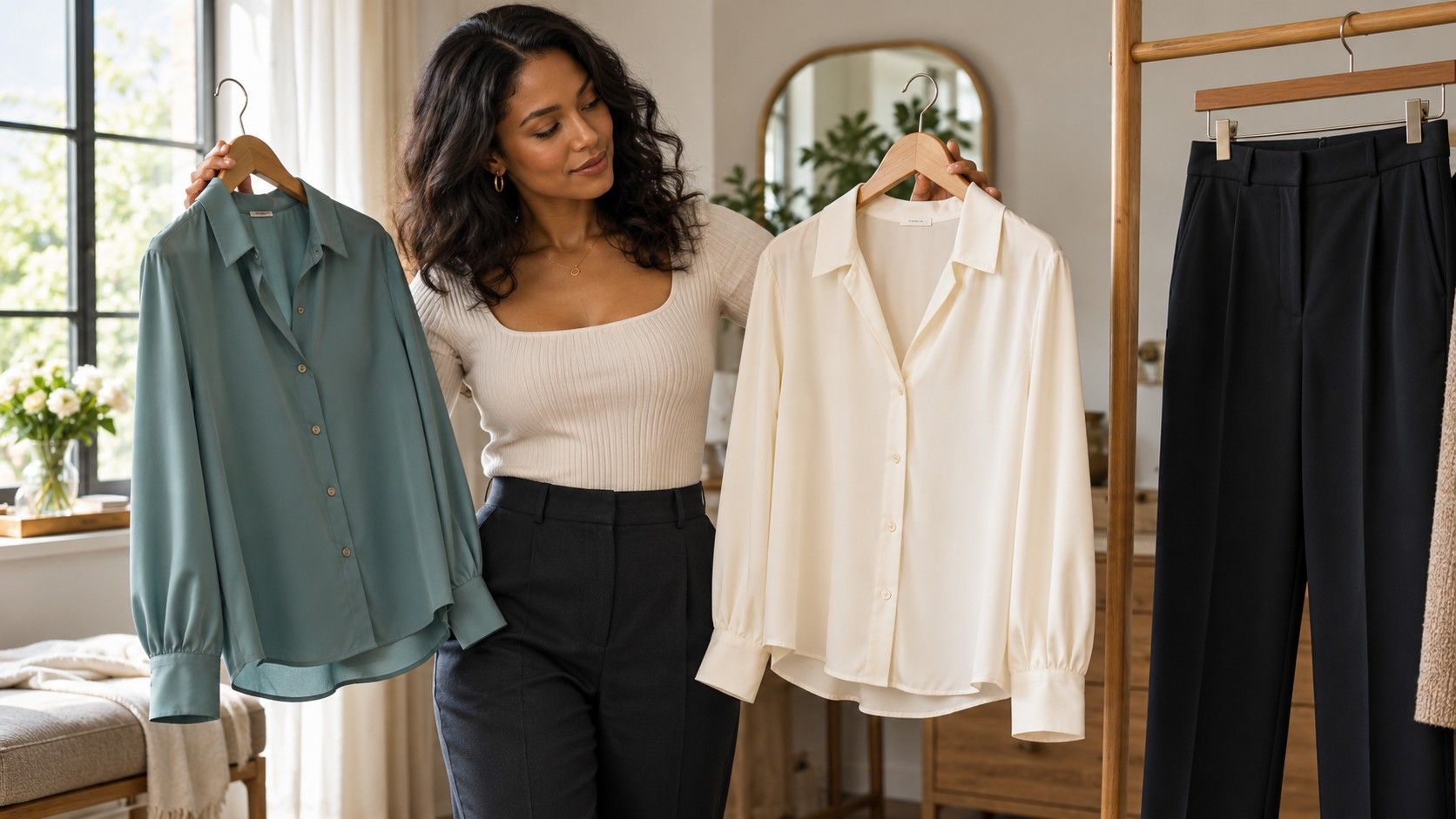
| A new color family | Compare actual fabrics near your face in consistent light | A reliable palette from the original photo alone |
Use your own criteria for success. Perhaps the new length makes a favorite pair of trousers easier to style; perhaps the original outfit feels better and stays in place. Both are useful outcomes. Record the concrete reason rather than whether the experiment agrees with the software. You are evaluating clothes for your life, not completing a test where the label must be right.
Recognize confidence that is doing too much work
A precise-looking percentage can make an answer feel more dependable than its explanation warrants. Without clear information about how the service was evaluated, what it measured and what the number represents, you cannot interpret that score as a guarantee of correctness. Look for an explanation that acknowledges image limitations and distinguishes observation from inference.
Be wary when a service moves from one visible feature to a sweeping conclusion. Shoulder appearance in one pose does not establish a complete style identity. Skin appearance does not establish clothing dimensions. A recommendation that treats a body as defective or prescribes weight change has stepped away from the wardrobe question. Close the result and return to fit, comfort and the details you actually want to wear.
Commercial recommendations also need an ordinary shopping check. A suggested dress may be available in an unsuitable fabric, lack the size you need or require care you dislike. Before buying, inspect measurements, construction, return terms and the full price. The software's endorsement cannot tell you whether that particular item will remain comfortable through your day. Save the idea and test a similar piece you own first.
Keep a useful observation and let the label go
After the experiment, a short note is enough: “This jacket length works with the high-rise trousers,” or “The softer blouse moves better under my work jacket.” Include the garment and the situation. That keeps the insight useful even if another tool returns a different category next week. A wardrobe record made from successful outfits is easier to apply than a collection of conflicting analysis screenshots.
If you continue using a tool, judge it by the quality of the decisions it supports. Does it offer clear, low-cost trials? Can you disagree with its answer without being pushed toward another purchase? Does it explain what the image cannot establish? AI body type analysis can be a source of ideas, but the final evidence comes from the garment on your body, in motion, during the day you need it to serve.