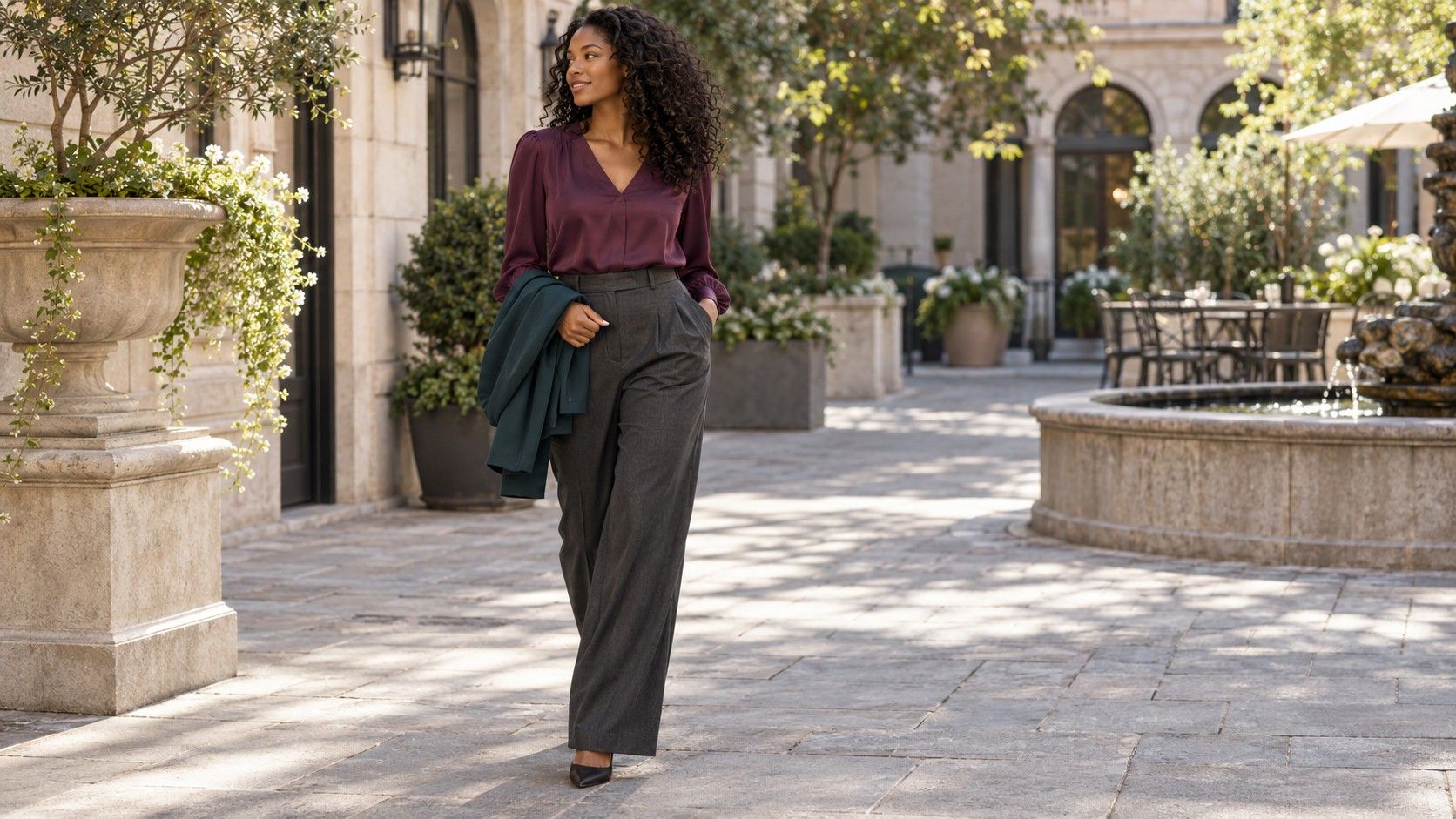
A soft shirt in a rich plum can feel easy and look sharp at the same time. That is the useful starting point for exploring Soft Natural and Deep Winter together: treat the clothing shape and the color as two choices you can test separately. You do not need to establish a perfect identity before getting dressed. Start with something comfortable, see what its color does near your face, then adjust the proportions until the whole outfit makes sense for your day.
Keep color depth separate from fabric weight
Deep Winter, also called Dark Winter in some seasonal systems, is commonly associated with deep colors and a cool leaning palette. Soft Natural comes from a different style vocabulary, one often explored through relaxed construction and softer movement. Neither label supplies a scientific diagnosis, and combining them does not produce an official set of outfit prescriptions. These are styling experiments. A useful result is a garment you enjoy wearing, whether or not it resembles somebody else's interpretation.
It is easy to turn the word deep into a shopping instruction for heavy wool, thick leather and dense black knits. Color depth describes appearance; it does not dictate cloth weight. A dark teal blouse can be lightweight. A pale jacket can be thick and stiff. On a warm afternoon, a fluid plum shirt and breathable charcoal trousers may offer the color impression you want without an uncomfortable amount of fabric.
Check a material in motion before deciding it is soft enough. Lift an arm, sit, then let the cloth settle. Does the shirt fall back into place, or must you rearrange it? A jersey can cling despite feeling soft in the hand; a woven fabric can hang gently despite having some body. I would judge the finished garment before trusting a fabric description on a label.
Give relaxed clothes a clear point of reference
Room and definition can exist in the same outfit. Try straight trousers with enough ease to sit comfortably, paired with a shirt whose front hem is partly tucked. The tuck is an option for controlling the amount of visible fabric, not a requirement to display a waist. Leaving the shirt loose may work better when its hem ends where you like the overall balance.
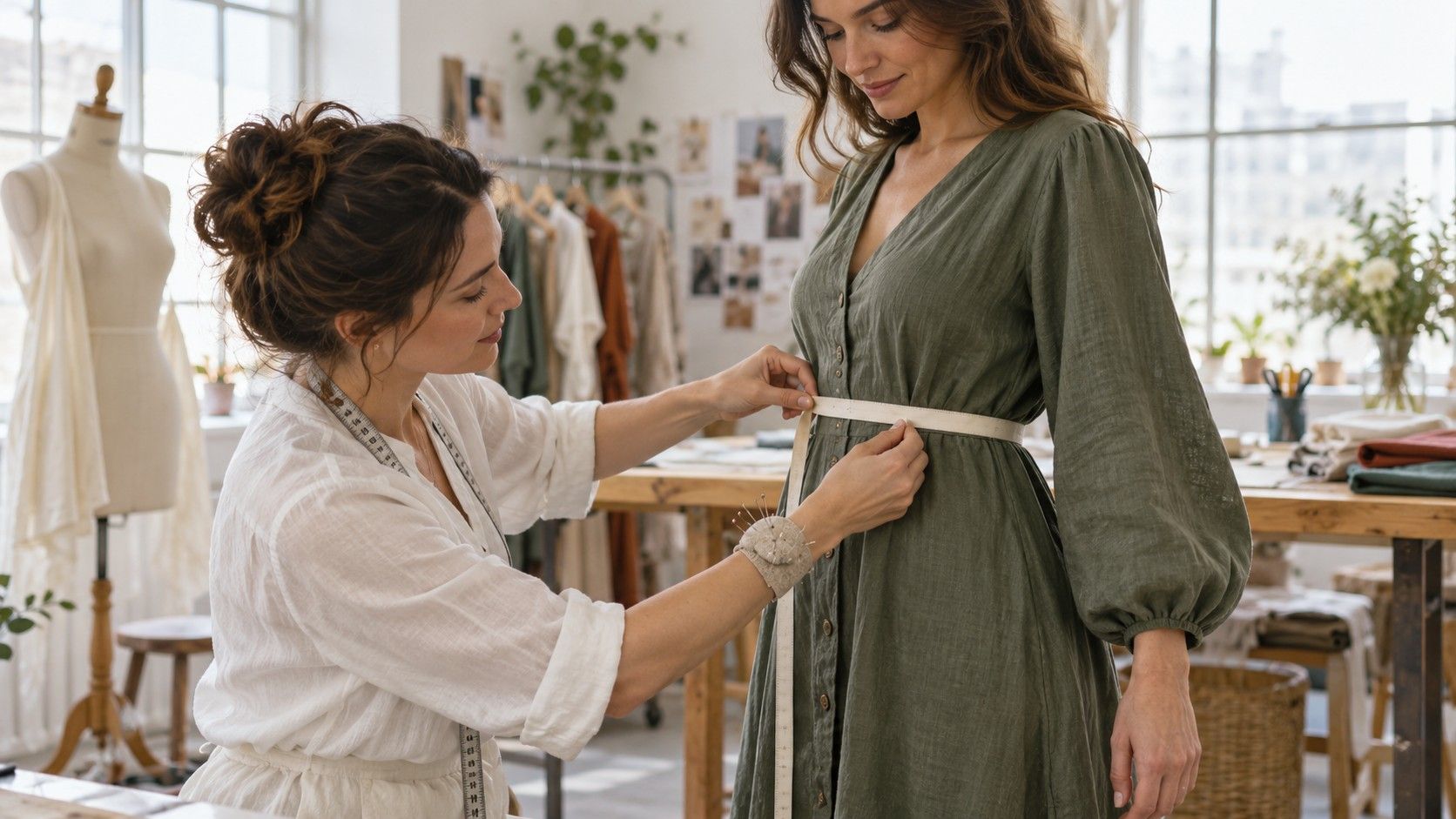
Look at where the seams actually land. Shoulder seams pulled toward the neck, buttons opening when you move, or a sleeve that restricts reaching are fit issues worth addressing before a style label. A larger size, another cut or a small alteration may solve them. There is no reason to interpret a restrictive garment as evidence that your body has been typed incorrectly.
For a jacket, compare a relaxed blazer with a cardigan in the same approximate length. Wear your usual top underneath both. The blazer may supply the clean outline you want for a meeting; the cardigan may make more sense for a commute with a bag over your shoulder. An open front can create a visible boundary around a dark base, while a closed front may feel calmer. Take a full length photo of both versions if the mirror leaves you uncertain.
Decide where you want strong contrast
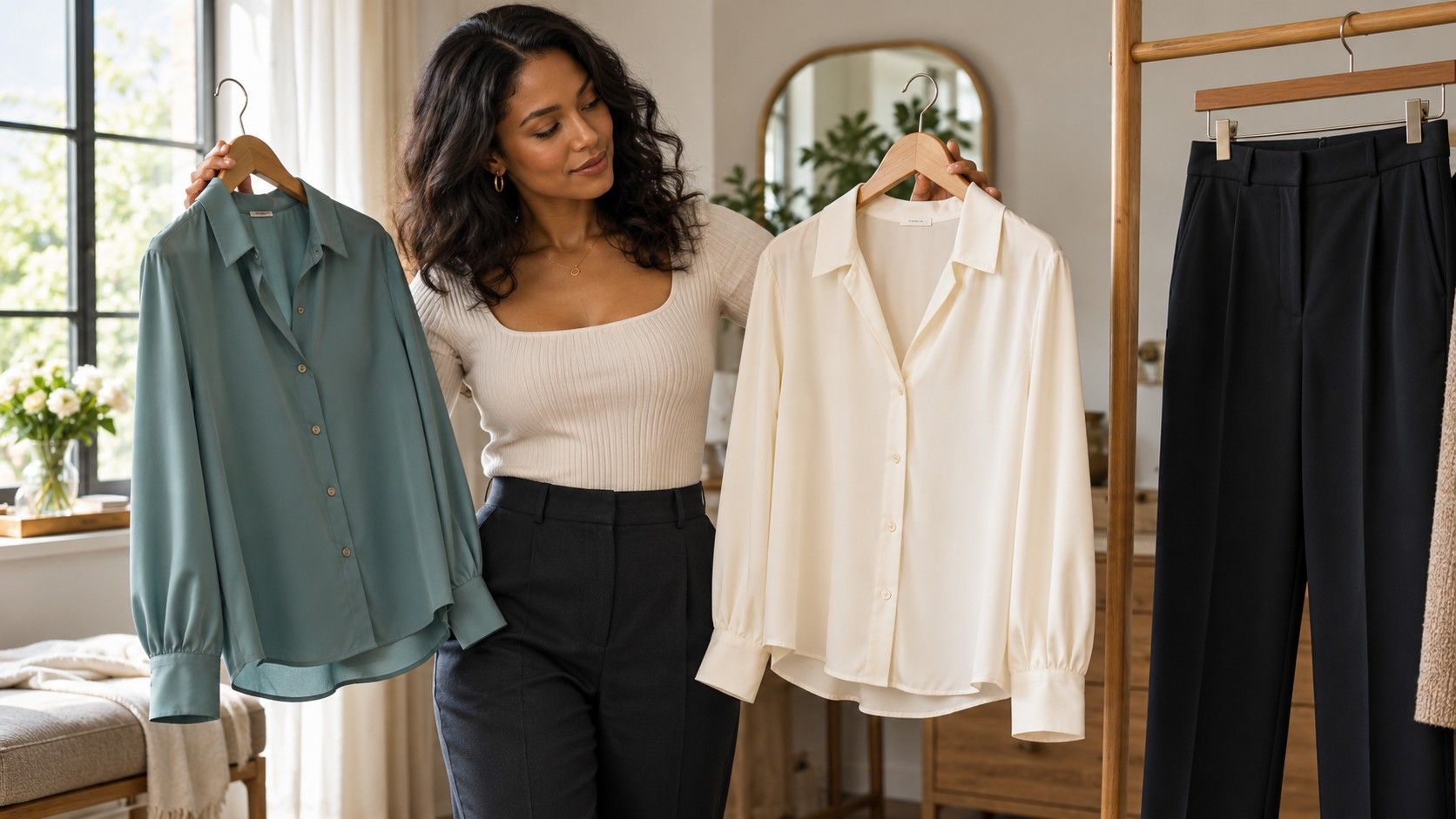
Dark trousers and a bright white top create a different impression from dark trousers and a berry top, even if every seam is identical. When exploring a soft natural deep winter combination, compare those arrangements before buying extra clothes. Strong color contrast can provide the focus, allowing the garment construction to remain simple and comfortable.
Start near the face because that is where you can most easily compare the effect of a neckline, scarf or collar. Hold a clear berry fabric and a dusty rose fabric below your chin in ordinary window light. Notice your own preference: does one feel more lively, more severe or simply easier to wear? Avoid turning shadows, redness or a single phone image into a verdict about your season. Camera exposure and the light source can change what you see.
If a bright top feels too assertive, move that color to a smaller area. A teal scarf, berry earrings or a bag can supply a clear accent beside a charcoal outfit. Conversely, if a tiny accent disappears, try a whole blouse in that shade. The size and placement of the color matter as much as its name. You are choosing how much attention an area receives, not correcting it.
Build three outfits around clothes you already use
For an ordinary workday, start with charcoal trousers, a deep berry blouse and an open navy jacket. A blouse with a little movement can sit comfortably under a jacket that provides more structure. Check that the sleeve is not bunching at the elbow. If the jacket and trousers create an almost matching suit that looks accidental to you, make the difference more obvious through texture or shade.
For a casual day, try dark denim with a deep teal knit and a simple belt if you like one. Use denim that lets you bend and sit without constant adjustment. A slightly open neckline can change the arrangement without requiring a low cut; a small collar or a few open buttons may be enough. Dark sneakers, ankle boots or another familiar shoe can finish the outfit. Walking comfort is a more useful criterion than whether a shoe fits a category illustration.
For dinner, compare a softly draped plum dress with the same dress under a dark jacket. One version might feel sufficient on its own; the other might work better for cool weather or the setting. If you prefer separates, use a rich colored top with a dark skirt and test the overlap while seated. An outfit that looks balanced standing up can become annoying when the top rides up or the waistband twists.
Keep accessories restrained during the first comparison. Changing earrings, bag, belt, shoe shape and lipstick at once makes it difficult to know what improved the result. Once you like the base, add the pieces you normally enjoy. Polished metal, matte leather or a textured bag can all work; the question is whether they support your chosen level of contrast and feel practical.
Adapt the idea when the weather changes
A summer version can use a breathable dark top and lighter weight trousers, with color contrast carried by a small print or accessory. Test opacity in daylight: a fabric that appears dense indoors may become transparent outside. Consider how it behaves with the underlayer you actually intend to wear. Buying a fluid garment that needs a hot, restrictive extra layer can defeat the comfort you were seeking.
For colder weather, let the coat fit over your complete outfit. Try it with the knit and jacket you use together, then reach forward as though holding a steering wheel. Deep color does not require every layer to be black. Navy, charcoal, plum and a contrasting scarf can separate the pieces visually. If the scarf fills the neckline too much, try a smaller fold or wear the coat open when conditions allow.
Texture changes how color reads. A fluffy knit may scatter light and look less crisp than a smooth woven top in a similar shade. Neither is automatically wrong. Place them beside each other and decide which effect you prefer that day. This is particularly helpful when an online palette swatch seems to promise a result that the real garment does not deliver.
Use a normal day as the final test
Before keeping a new combination, view it in daylight away from a strongly colored wall. Photograph the whole outfit from a comfortable distance, with the phone around mid torso height if possible. Use the same position for comparisons. A close selfie is useful for checking a collar, but it tells you little about how the trouser hem meets the shoe.
Then wear the outfit for something ordinary: a short walk, a commute or an afternoon at a desk. Notice whether you pull the neckline back, straighten the hem or avoid sitting a certain way. Those observations are actionable. Perhaps the color is excellent and the sleeve needs changing; perhaps the fit is right and you prefer a lower contrast pairing. You can keep the successful part without accepting an entire system.
After a few wears, write down one small repeatable choice, such as a rich colored top with easy dark trousers, or a fluid blouse inside an open jacket. That is enough to make getting dressed easier. The combination often searched as Soft Natural + Dark Winter can remain a flexible reference, with your comfort, preferences and actual wardrobe making the final decisions.