A personal style system is useful when it makes getting dressed easier. It becomes less useful when every ordinary outfit needs a new round of research. Before assigning yourself a category, identify the decision you want help with: choosing colors, finding comfortable shapes, or making separate pieces work together. Then try one idea with clothes you already own. You can keep the useful observation without accepting an entire set of wardrobe rules.
Name the problem that shows up on a normal morning
Open your wardrobe and think about the last time getting dressed was frustrating. Perhaps you had clean clothes but no comfortable work outfit. Perhaps you liked each item separately yet disliked the combination. Or you kept wearing the same two tops while ignoring the rest. These are different problems. A system that discusses visual impression will not necessarily solve a shortage of washable work shirts or trousers that fit comfortably when seated.
Write the problem in one literal sentence. “I cannot wear this jacket over my usual knit” gives you a fit and layering question. “My outfits feel more formal than I want” points toward styling and context. “I keep buying colors that do not work with my trousers” suggests a wardrobe coordination issue. Avoid turning these observations into a criticism of your body. The useful target is a clothing decision you can change.
Also name the practical conditions. A commute on foot, a warm office, laundry once a week or a job that requires reaching will affect the answer. If you need shoes for a long walk, begin there and build an outfit around them. Personal style happens inside these conditions.
Choose one source of ideas for one question
Personal style systems describe different aspects of appearance. Body-shape approaches generally discuss proportions, color systems organize color relationships, and essence approaches offer language for visual impression. Other systems combine several ideas. Read enough to understand what a framework is trying to describe before using its advice. Two writers may use the same familiar word while referring to different concepts.
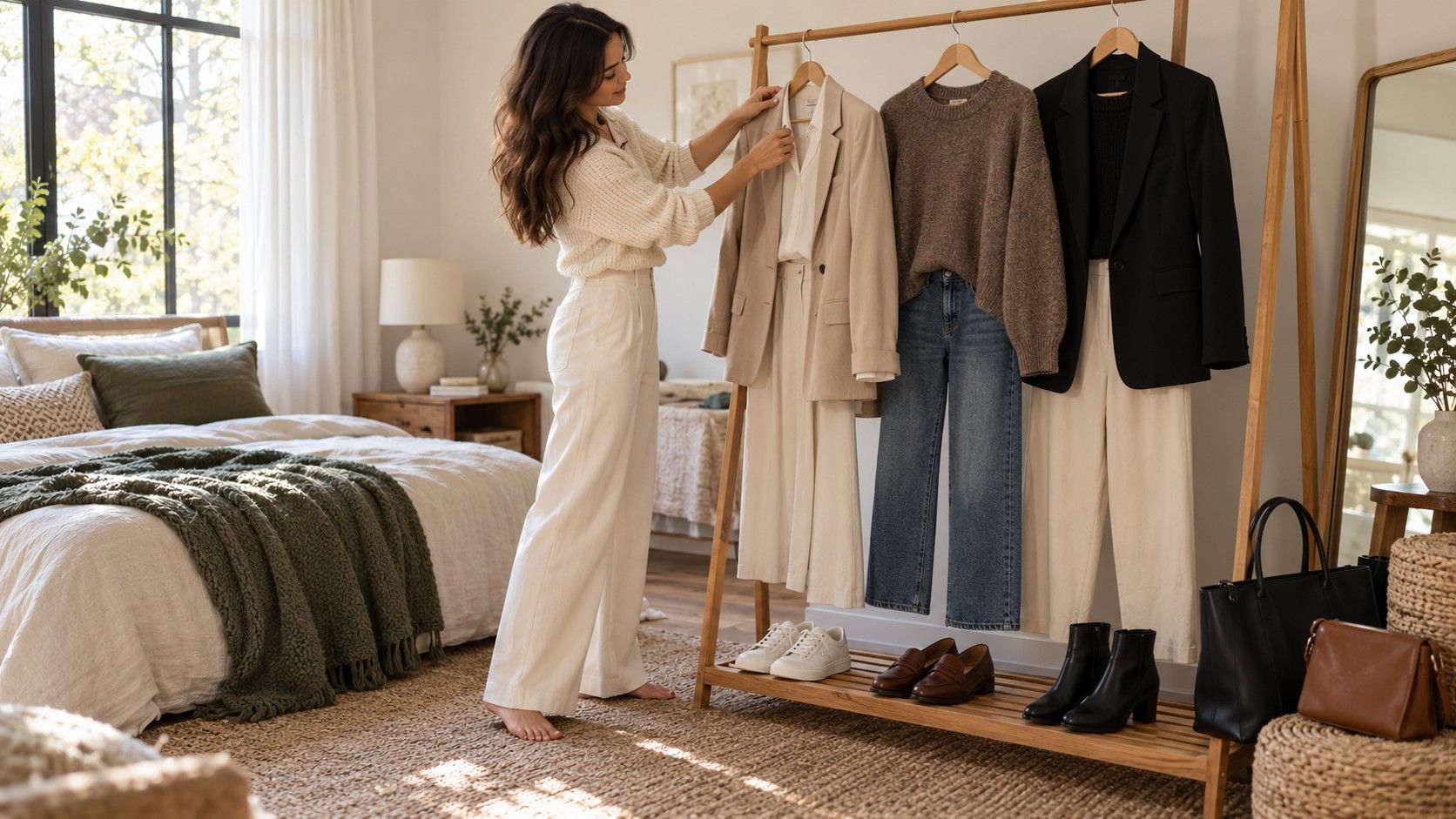
You do not have to resolve every category before trying something. If you want a calmer color combination, compare related tones you already own. If a long top seems awkward with a skirt, test a shorter hem or a tuck. If an outfit feels too polished for your weekend, try a more relaxed bag or shoe. These changes are small enough to reverse and specific enough to teach you something.
For the first trial, keep other frameworks out of the decision. Combining an unfamiliar body label, an uncertain palette and a new essence description can generate more restrictions than you can evaluate. Give one idea a clear job. Afterwards, you can judge whether it helped and whether a second tool would answer a different question.
Run a wardrobe style experiment without buying anything
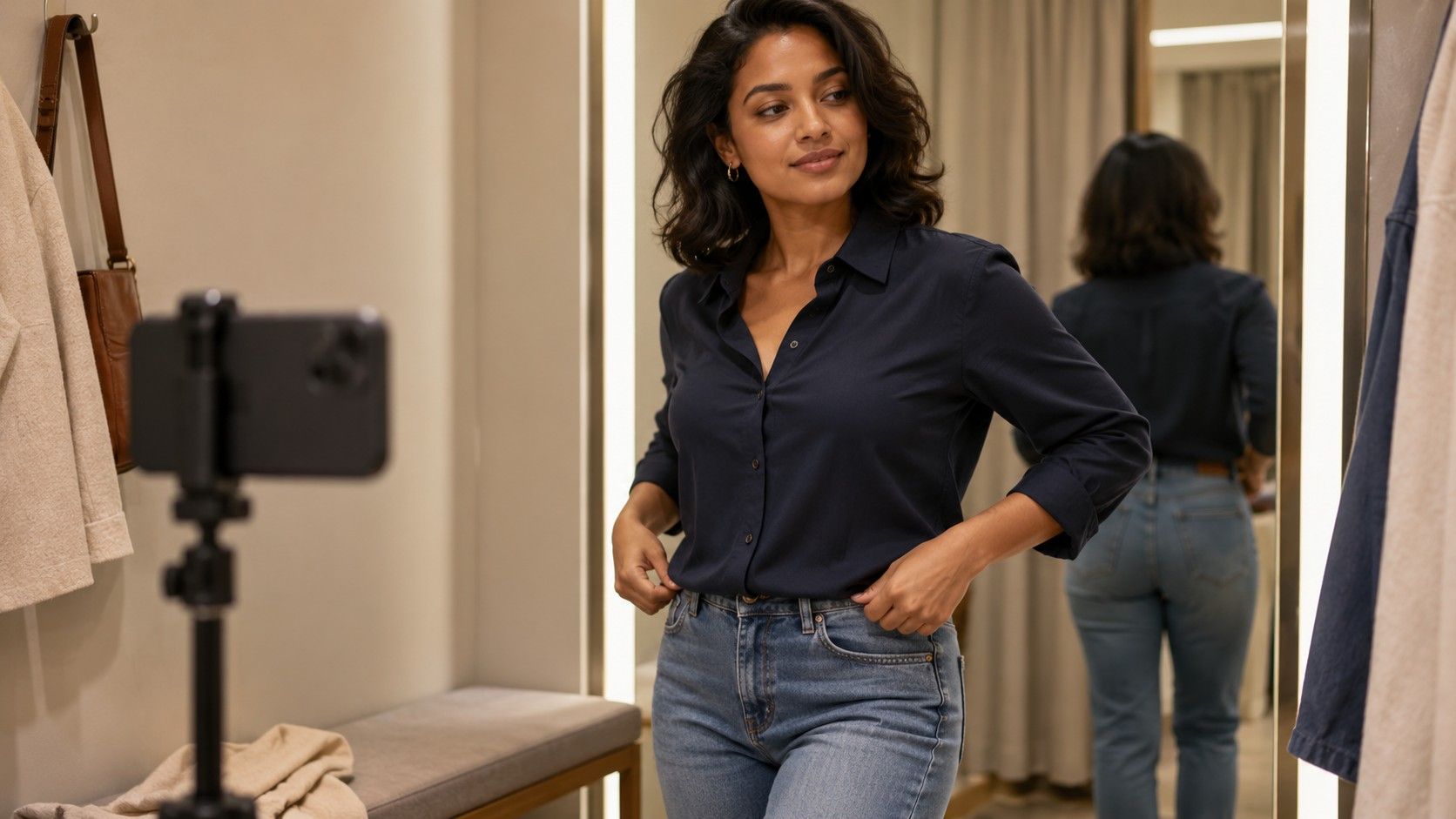
Choose an outfit you already wear, even if it feels slightly unfinished. Put it on with your usual underlayers and footwear. This is your starting comparison. Take a photograph if that helps, using the same camera position and light for each version. Then change one thing: the top length, the shoe, the outer layer or the accessory. Changing everything at once can produce a lovely outfit without showing you which choice mattered.
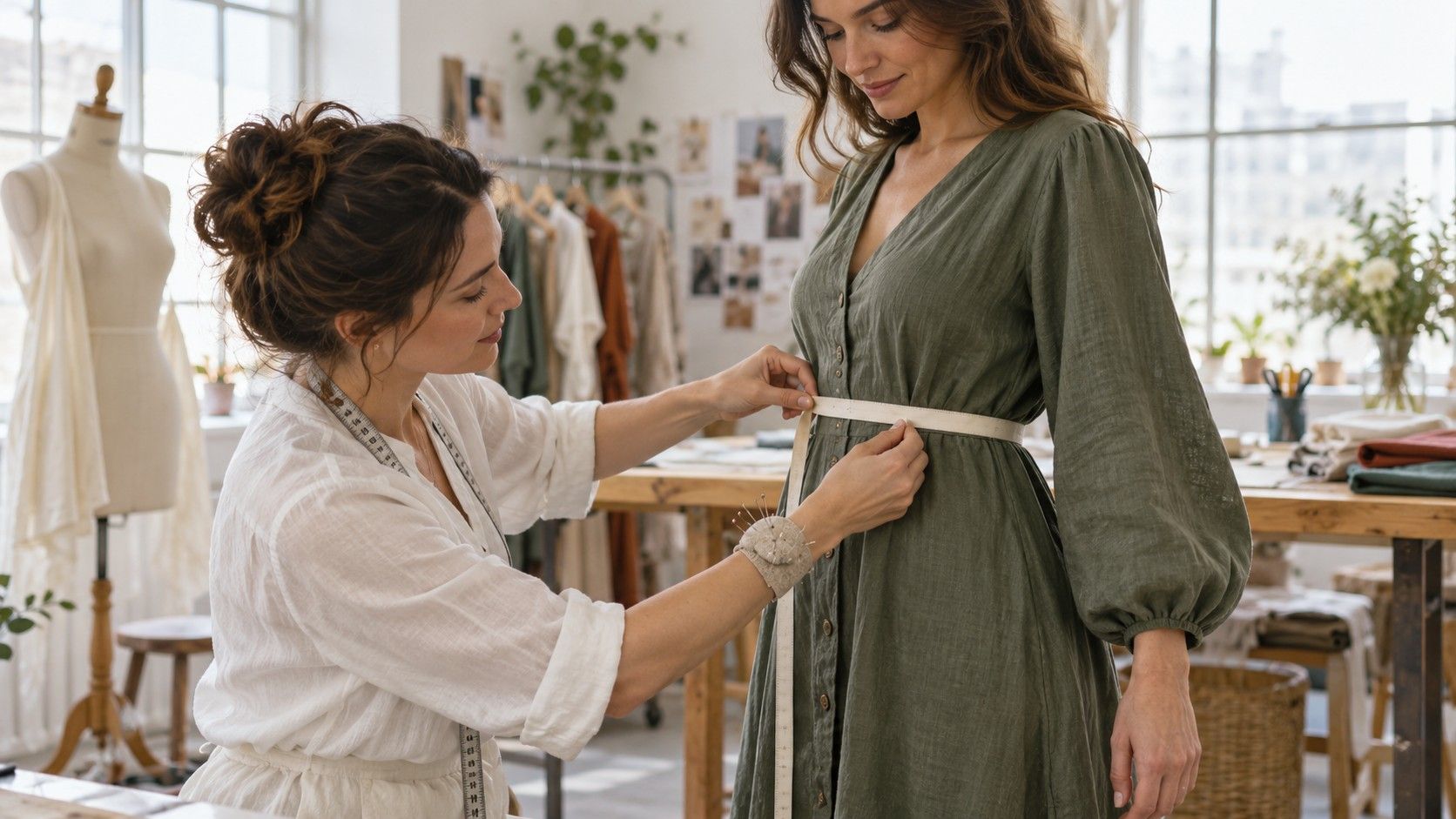
Use temporary adjustments carefully. Fold a hem to compare lengths, try a small tuck or borrow a belt you already own. You are testing an appearance, not deciding immediately to alter the garment. If a trial looks promising, check what a permanent version would actually require.
Spend a few minutes moving in both versions. Sit as you would at a desk, reach for a shelf, walk and put on your bag. Notice whether the neckline shifts, the hem catches or the waistband becomes uncomfortable. A style suggestion that looks appealing in a still image can fail during an ordinary task. Keep the movement observations separate from your judgment of the photograph.
When two garments differ in several ways, acknowledge it. A shorter jacket may also be softer or lighter, so the comparison cannot isolate length perfectly. You can still discover an outfit you enjoy. Just keep the conclusion proportionate: “I prefer this jacket with these trousers” is supported; “all long jackets are wrong for me” needs much more evidence.
Give the preferred version a real day
Wear the promising combination somewhere familiar before making a shopping list around it. An errand, a workday or a lunch gives you information a mirror cannot. Note whether you adjusted the clothes, felt comfortable with the level of formality and had what you needed in your bag. If the outfit only works while standing carefully, that limitation belongs in the result.
Choose your success criteria in advance. You might want an outfit you can assemble in five minutes, trousers that stay comfortable through a meeting, or a combination that makes a neglected shirt easier to wear. “Look better” is harder to assess because the target can shift whenever you see a new photograph. A practical criterion lets you stop when the outfit does the job you asked of it.
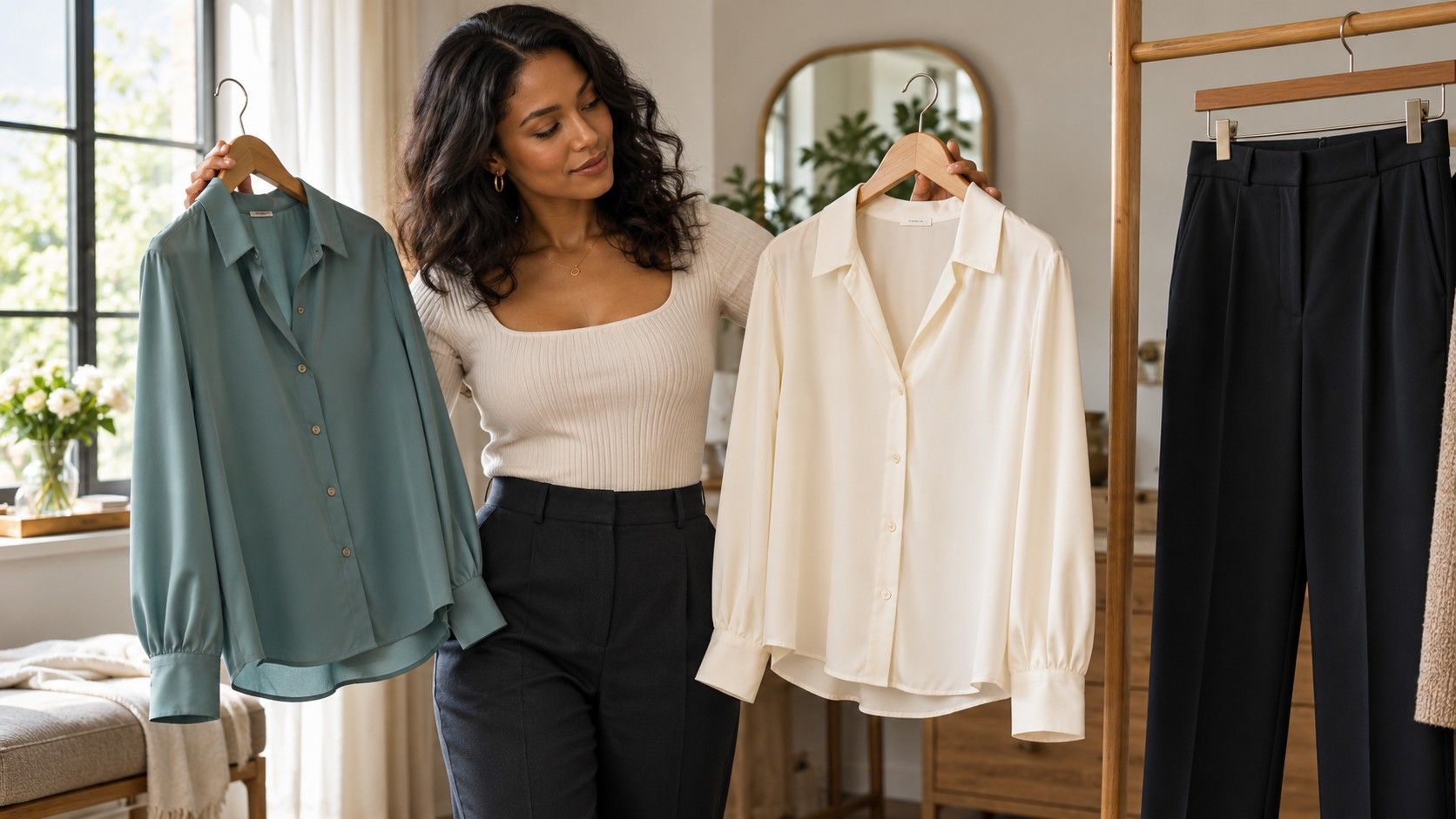
You may like both versions for different reasons. Keep the relaxed version for weekends and the smoother one for a work appointment. A useful system should help you notice those distinctions rather than forcing one answer for every context. Your preference can change with the destination, weather or amount of walking.
Keep a small record that you will actually use
Save a photograph or write a few lines for each successful outfit. Include the pieces, the important fit detail and the occasion: “blue shirt, soft trousers, sleeves rolled once, comfortable on the train.” A label alone leaves out the useful construction. When you later try another shirt, you can compare sleeve bulk, hem length and fabric instead of wondering whether you have chosen the wrong category.
Record failures just as plainly. “Bag strap pulls the neckline” suggests an accessory or garment change. “Too warm with the extra layer” suggests a fabric or layering adjustment. Avoid a general verdict such as “I cannot wear this style.” One poor combination does not establish that every related garment will fail, and one successful outfit does not require a complete wardrobe replacement.
After several real wears, look for repeated details. Perhaps your favorite tops sit comfortably above the trouser pockets, or you prefer a simple neckline when wearing a patterned skirt. Those observations can guide a later purchase. Check the actual item against the detail that mattered, including how it moves and how it is cared for.
Set a point where label research ends
Before opening another quiz, decide what would count as enough information. You could allow one short reading session, choose two outfit ideas and stop until you have tried both. Its purpose is to prevent research from taking the place of wearing clothes. If you cannot name a new decision that another article will help you make, close the search and return to your wardrobe.
Pause a framework when its advice creates more confusion than workable outfits. Other stop signals are repeatedly retaking the same test, rejecting comfortable clothes solely because of a category, or feeling that you must buy several items before you are allowed to experiment. These are reasons to step back. You can return later, choose another vocabulary or simply continue with the outfit notes you have already collected.
A system also needs room for disagreement. If an appealing suggestion fails your movement test, change it. If a supposedly unsuitable outfit works well and you enjoy wearing it, keep it. You do not need to prove that the exception secretly fits a more complicated category. The point of the exercise was a better wardrobe decision, and your practical result provides the evidence.
At the end of a useful trial, you should have something modest and concrete: a repeatable outfit, a clearer shopping criterion or a garment adjustment worth exploring. That is enough. Personal style systems can remain reference tools on the shelf while you get dressed, leave the house and use the clothes for the life you have.