If you have encountered the phrase peach body type and wondered which clothes it allows you to wear, pause before making a shopping list. The label is ambiguous: a creator, retailer or quiz may use it in its own way. Without that source's definition, the name tells you little about garment fit. You can still take something useful from the search by identifying the clothing problem you want to solve, then testing actual cuts and fabrics instead of trying to match yourself to a fruit.
Find out what the source actually means
Read the explanation beside the label, including any diagram or measurement instructions. Does the source describe a relationship between measurements, an outline in a photograph, or simply an aesthetic? Those are different things. If it gives no explanation, there is no reliable basis for translating its peach label into another system. You do not need to fill the gap with a guess about your body.
Treat any outfit advice as the author's suggestion and ask what the garment is supposed to do. A recommendation to try a fuller trouser leg is testable. A statement that a shape must always hide or balance something is a preference presented as a rule.
Be especially cautious about typing from a single body part or an angled photograph. Camera distance, posture and clothing all change an outline. A close phone image cannot tell you which trouser rise will feel comfortable at your desk. Nor does a peach body type label establish anything about health, fitness or what your body should look like. For shopping, the details of the garment are the useful evidence.
I would translate the original question into something concrete: trousers fit through the seat but gap at the waist, a skirt twists during walking, or a shirt catches when sitting. You may have none of these problems and simply want a different look. That is a valid reason to experiment too. The label can remain a search term without becoming a personal identity.
Take measurements for the item you want to buy
Choose measurements that answer a real shopping question. For trousers, a brand may ask for waist and hip circumference, while the product page may provide inseam and rise. For a blouse, bust and sometimes shoulder or sleeve information may be more relevant. Follow the brand's instructions, because the point it calls the waist may differ from where a low rise waistband sits.
Use a flexible measuring tape over the underlayers you expect to wear. Stand normally, breathe easily and hold the tape level without pulling it into the skin. A mirror or a helper can show whether it has climbed at the back. Repeat a surprising measurement before recording it. Keep the units beside the number so an inch measurement does not later get compared with a centimeter chart.
Measurements are a starting point, not a promise. Two people with the same waist and hip measurements may prefer different rises, leg shapes or amounts of room. Even on one person, a stiff woven trouser and a stretchy knit pair can require different choices. Look for information about fabric stretch, lining and the intended fit as well as the size chart.
You can also measure a favorite garment laid flat, following the retailer's method if one is supplied. This is especially useful for a trouser inseam or the width of a top you already enjoy. Do not compare a flat waistband width directly with body circumference. Garment dimensions and body measurements describe different things, and elastic or shaped waistbands make a simple doubling exercise less informative.
Try trousers with room in the places you need it
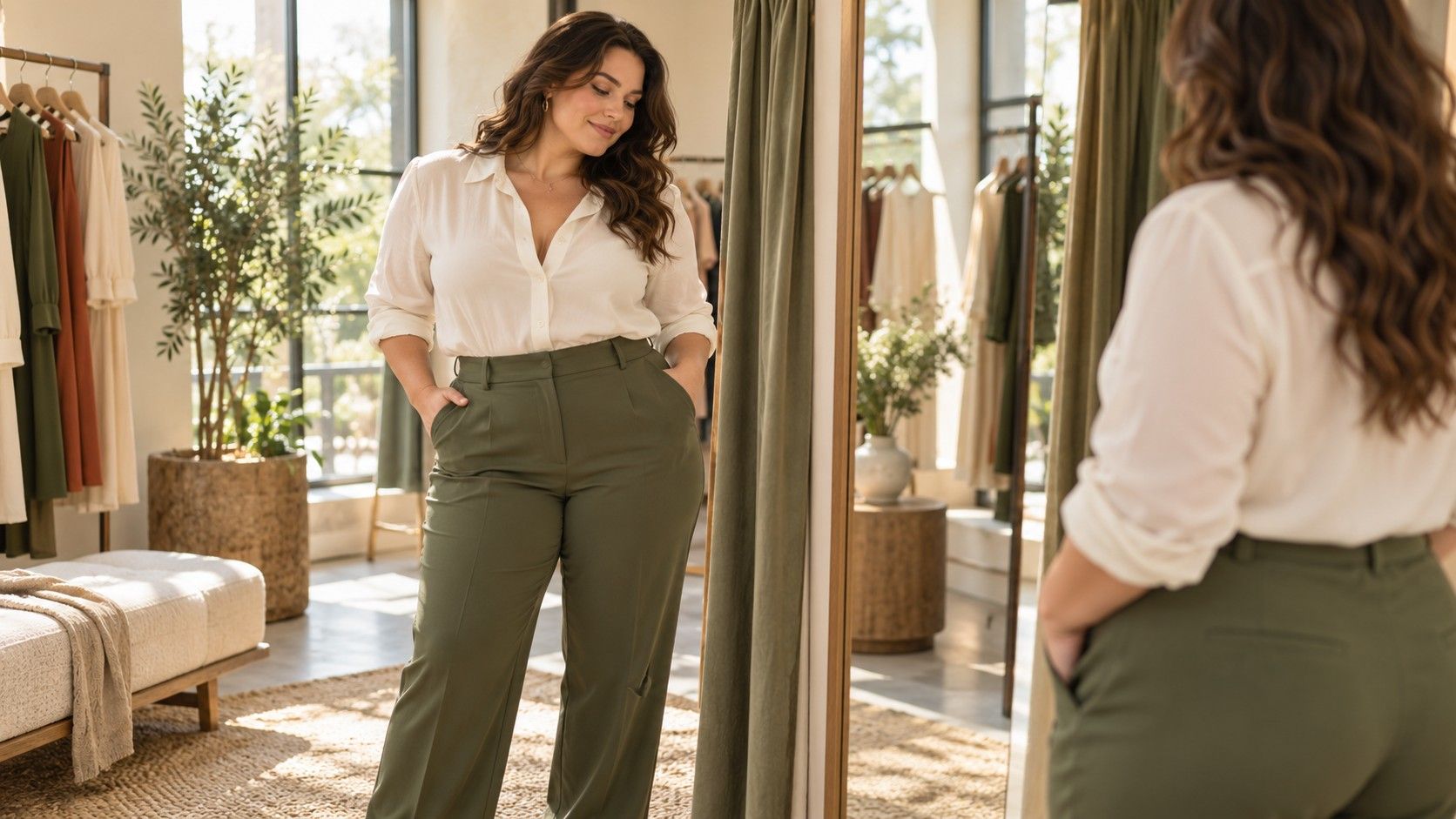
If trousers feel tight through the seat or upper thigh, try a cut with more room there while keeping the rest of your preferences open. Curved fit, relaxed fit and other retail names can be useful search filters, but their meaning varies by brand. Try the garment and see. The goal is comfortable movement, not proof that a named category suits you.
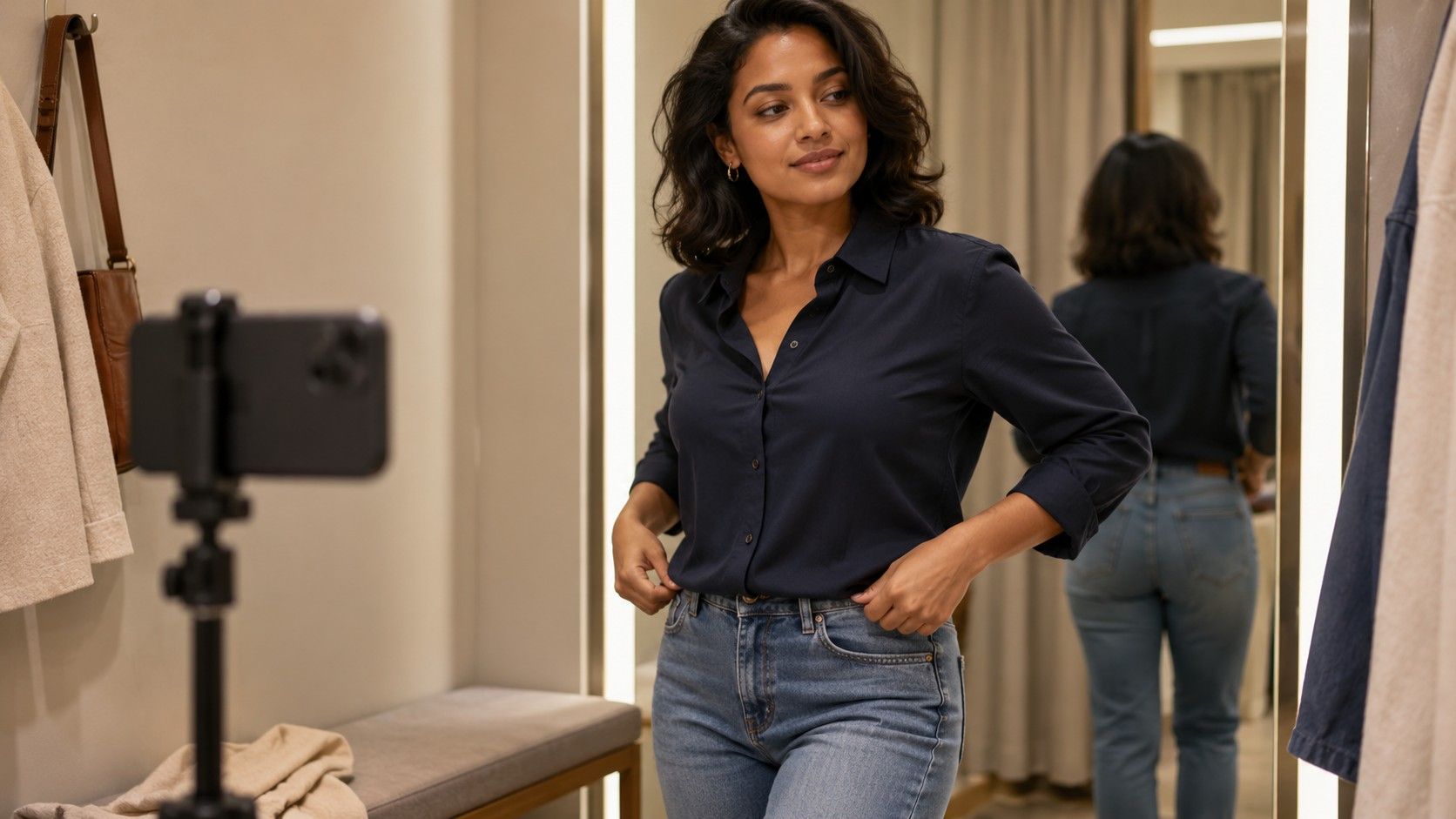
In the fitting room, sit, bend gently and take a few steps. Check whether pockets remain reasonably flat and whether the waistband presses when seated. Pulling lines can be clues to tension, but they do not identify one universal cause. Size, rise, fabric and pattern shape all matter. If several areas feel wrong, trying a different cut is often more informative than repeatedly sizing up.
A waist gap alongside a comfortable seat may be worth discussing with an alterations professional. Before paying, ask what can be changed, what the finished waistband will look like and whether pockets or belt loops will be affected. A simple looking alteration can become complicated on a lined or heavily detailed garment. Include that cost in the purchase decision.
Choose the leg shape for the effect and activity you prefer. Wide, straight, tapered and flared legs are experiments available to you. Wear your usual shoes while comparing them, because a hem can fall quite differently over a boot and a flat shoe. A longer leg that drags on the floor is a practical problem even if its outline looks appealing in a still photo.
Choose tops and layers for the outfit you want
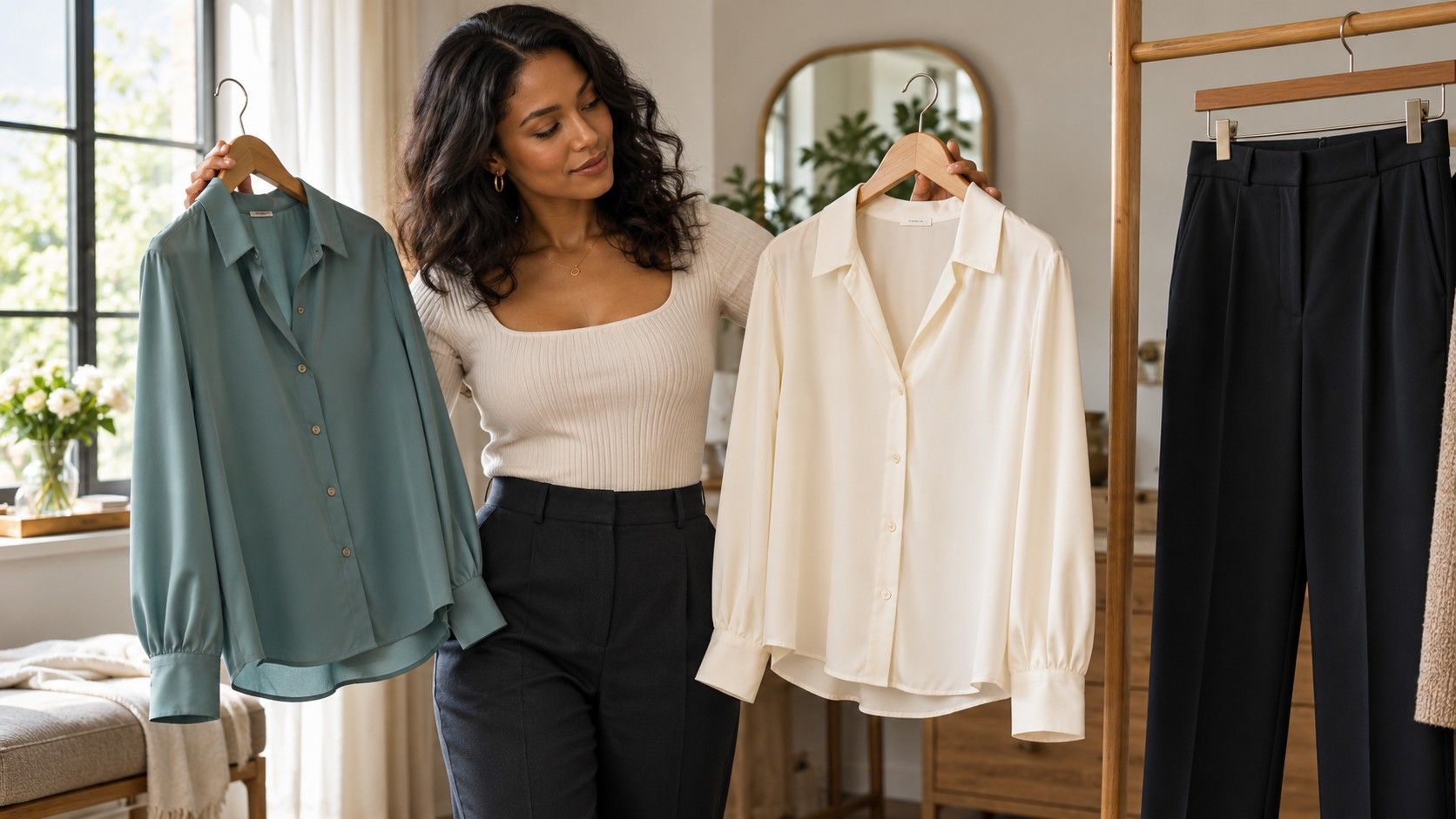
There is no need to select a neckline because an ambiguous body label supposedly requires it. Compare a familiar crew neck with an open collar or a shallow V, keeping the trousers unchanged. Notice the effect around your face and how the garment behaves when you move. If you use a necklace, scarf or undershirt, include it in the comparison.
Hem length can be easier to adjust than an entire wardrobe. Fold a shirt hem temporarily to see whether you like a shorter proportion, or compare a partial tuck with a loose front. Avoid making a permanent alteration until you have sat down and moved in the arrangement. A tuck that looks tidy for ten seconds but needs constant maintenance may not suit your day.
For an outer layer, check shoulder and arm movement over the clothes you intend to wear. An open cardigan and a relaxed blazer can frame the same outfit differently. One might feel right for a casual afternoon, the other for a meeting. You can enjoy both without assigning yourself to a different body category for each occasion.
Color placement is also optional. A brighter top can draw attention upward, while a bright trouser can make the lower part of an outfit the focus. Neither is inherently more flattering. Decide what you want to notice first. If you like a quieter overall impression, try neighboring shades; if you like a clear division, test stronger contrast.
Replace vague rules with a fitting checklist
Use the checklist to separate preference from fit. You may dislike a perfectly comfortable jacket because you want another mood; you may love a trouser outline that needs a shorter hem. Both observations help. Describing the specific issue gives you more options than deciding an entire garment category is wrong for your body.
When shopping online, read the return conditions before ordering an unfamiliar cut. Keep labels attached while trying it indoors, and test it with the underlayers and shoes you will use. A clear return route makes an experiment manageable. A bargain that cannot be returned may be expensive if the size chart offers too little information.
Keep the evidence from clothes you enjoy wearing
After a full day, note the brand, cut, size, fabric and any alteration that worked. Add a short note such as comfortable when seated or enough room under a coat. These details can guide the next purchase, although a different fabric or a later version of the same style may still fit differently.
If photographs help you compare outfits, use a similar distance and camera height each time. A full length picture can show how the hem meets the shoe; a close selfie is more useful for a collar. You can skip photos entirely if they make the process uncomfortable. The experience of wearing the clothes is enough to make a decision.
You may eventually decide that the peach label offers a helpful visual shorthand, or that it adds nothing to your shopping. Either outcome is fine. Keep the practical knowledge you have gained about room, movement, fabric and proportion. Those observations remain useful even when a quiz changes its categories or a new body shape term appears.