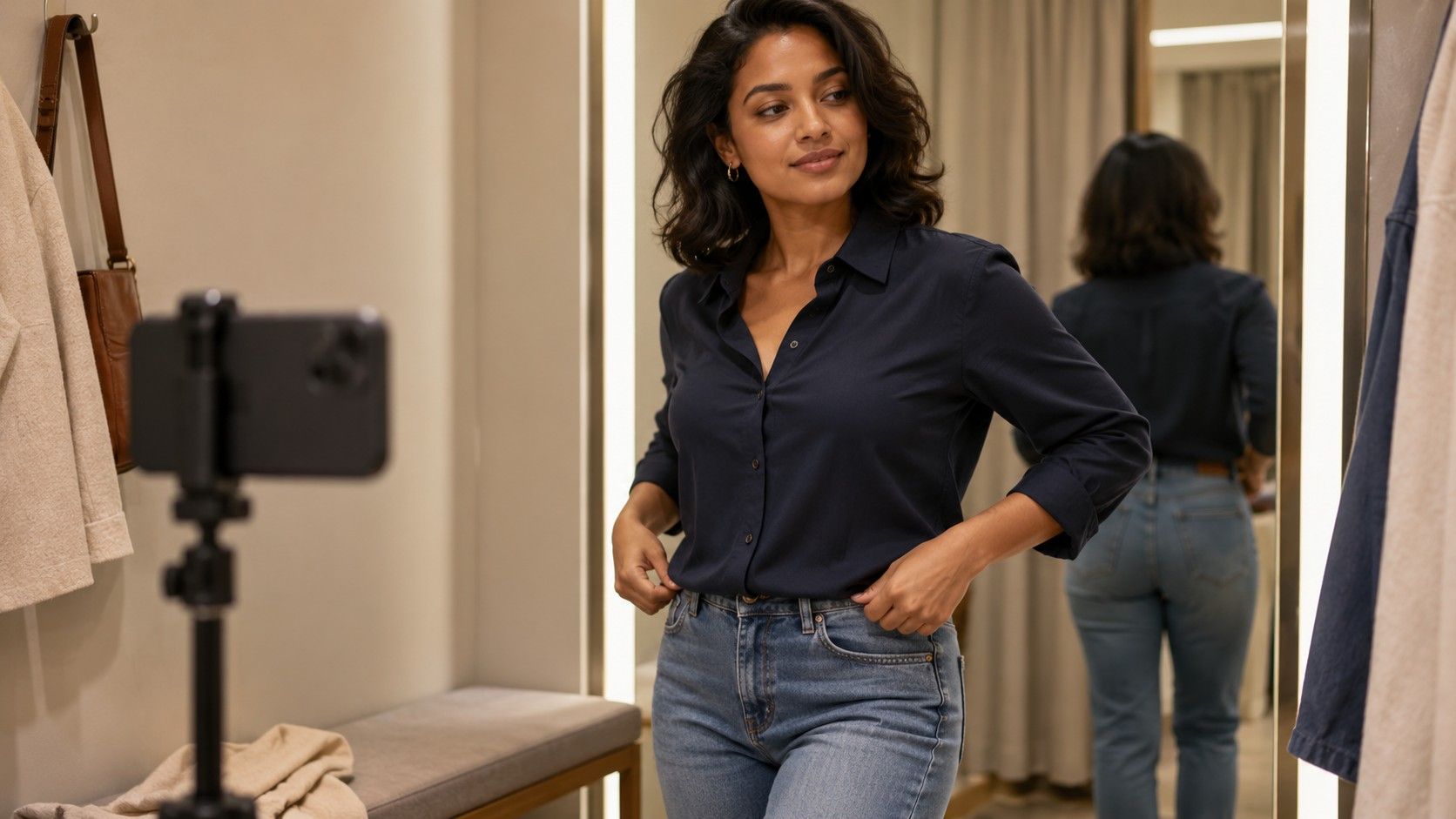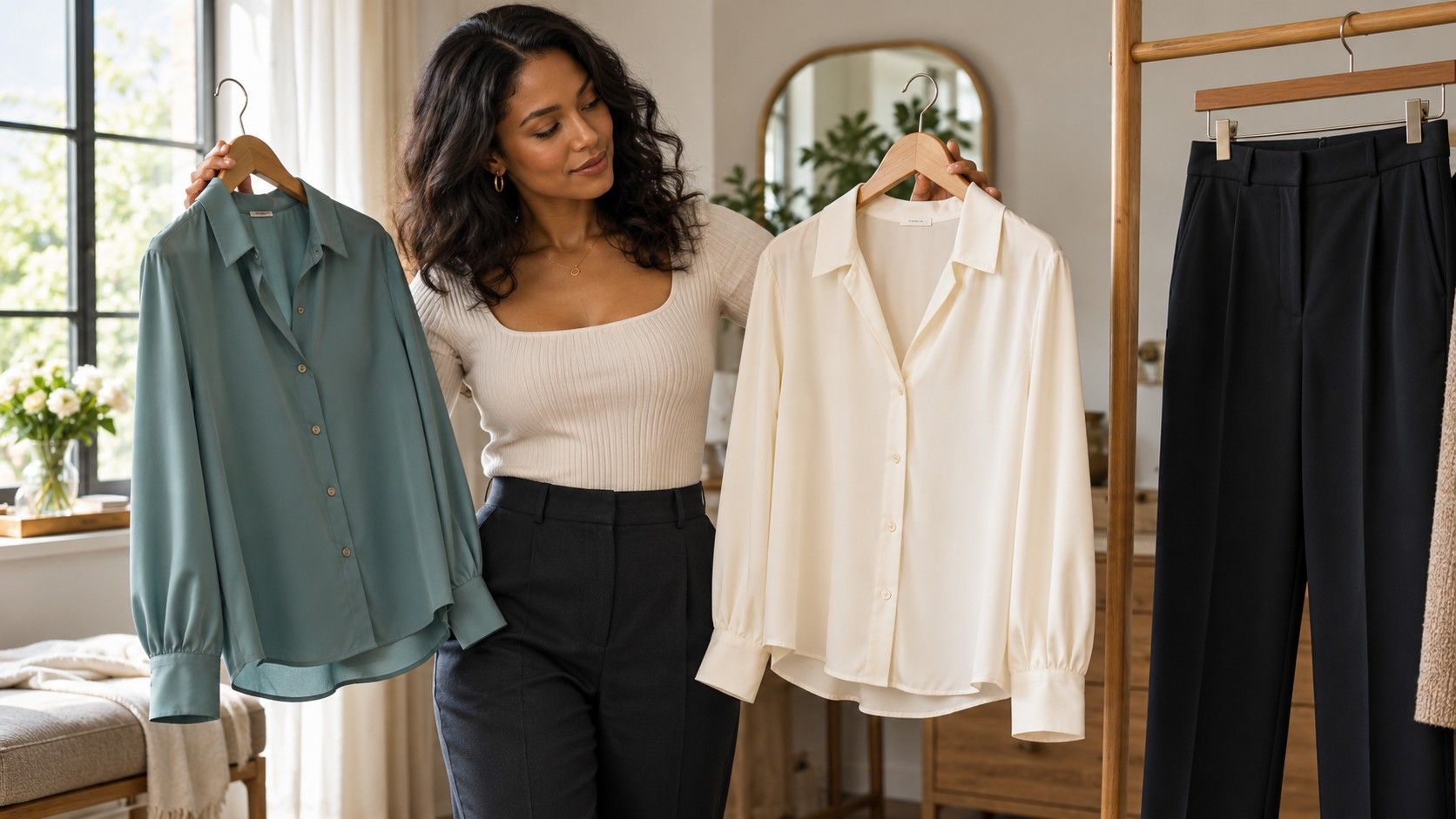
You can describe yourself as pear-shaped and still have no clear idea which jacket to buy. You can also spend weeks reading about Kibbe and remain unsure why a favorite outfit works. The comparison of Kibbe vs body shape becomes more useful when you begin with the problem in front of you. Broad proportion labels can help describe some fit differences; an image identity framework invites a wider look at personal style. Neither removes the need to try clothes, move in them and decide whether you like the result.
Start with the clothing decision you need to make
Perhaps trousers fit your hips but gap at the back waist. That is a specific garment problem. Compare waist and hip measurements with the maker's chart, try another cut, or investigate an alteration. Learning a style identity may be interesting, but it will not tell you the exact waistband construction or rise that this pair needs. Keep the practical task in view so research does not replace trying on clothes.
A different question sounds like this: “My clothes fit individually, but the complete outfit feels disconnected.” Here you may want to explore proportions, fabric, detail and the relationship between pieces. That is a broader styling experiment. You could study an image system, or simply compare a few complete outfits. The choice depends on whether the framework helps you notice something useful, not whether you can solve its terminology quickly.
Before opening another guide, choose a small outcome for the session. Find one jacket that works with two pairs of trousers, or decide whether you prefer a soft blouse or a crisp shirt under a favorite coat. A decision you can observe gives the reading a purpose. “Discover my perfect type today” leaves much more room for frustration.
Use body-shape labels as rough descriptions of proportion
Common body-shape charts use terms such as rectangle, pear, hourglass and inverted triangle. Definitions vary, and two charts may use different comparisons or thresholds. These categories usually summarize a few relative widths or circumferences. A label can provide vocabulary for a shopping conversation, but it does not contain every detail needed to draft a garment for you.
For example, two people with similar bust, waist and hip measurements can prefer different trouser rises because their torso lengths, posture and comfort needs differ. A stretchy garment and a rigid woven garment also need different amounts of ease. If a shape calculator gives a confident result, keep the underlying measurements and treat the category as a rough summary. The measurements may help with a size chart even when the label adds little.
Watch what happens when a shape guide moves from description to a demand to “balance” the body. That is an aesthetic preference, not a requirement. You may enjoy emphasizing your shoulders or wearing volume around your hips. A broad shape label cannot decide your preferred effect. Useful advice explains what a garment might do visually and leaves the decision with the wearer.
Understand the broader question behind Kibbe
David Kibbe describes his work through the Image Identity System. It is a personal style framework rather than a clothing-size chart or a medical classification. Reducing it to a set of circumference ratios misses that distinction. An online body-shape calculation cannot establish an Image Identity, and an isolated feature such as a hand, shoulder or jaw is an unreliable basis for making that claim.
As you encounter discussions of Kibbe, separate the creator's framework from shorthand circulating in quizzes, forums and shopping graphics. A graphic may present a tidy list of garments, but its existence does not make every instruction an official or current rule. If a claim depends on exact system terminology, check its source before treating it as authoritative. You can still test the clothes without repeating the claim as fact.
For a practical experiment, observe the entire outfit: how fabric falls, where the eye pauses, how details relate to one another, and how you feel moving through the day. A flowing skirt and a crisp jacket might create a contrast you like, or they might feel unrelated to you. That observation can guide another attempt. It does not, by itself, establish or rule out an Image Identity.
Compare what each approach can reasonably help with
| Your question | A proportion-based approach | A broader style exploration |
|---|---|---|
| Why does this waistband gap? | Compare garment and body measurements, rise and cut | May suggest a preferred look, but does not diagnose the fit |
| Why do these pieces feel disconnected? | Try a different hem or volume relationship | Consider fabric, scale, detail and the complete outfit |
| Which size should I order? | Use the brand's chart and garment information | An identity label cannot supply a size |
| Which colors do I enjoy near my face? | A shape label offers little help | Compare color separately under consistent light |
The overlap matters. You do not need to choose one school before noticing that a jacket hem changes an outfit. Many everyday observations can be made without a system at all. A framework earns its place when it gives you clearer language or a more productive experiment. If it adds uncertainty to a decision you previously found easy, set it aside for that decision.
Also distinguish preference from fit. A loose jacket may hang exactly as designed even if you prefer a closer cut. A fitted jacket may look appealing in a photograph while restricting your reach. Call these different results by their names. Otherwise, every disliked outfit becomes evidence that you have identified yourself incorrectly, when the garment may simply fail a practical need.
Test both approaches with the same clothes
Choose one base outfit and two layers you own. Keep the shoes, lighting and camera position similar if you take photographs. For the first comparison, focus on a measurable change: a shorter jacket hem, a higher waistband or a different amount of room through the sleeve. Write down what changes and whether it helps the outfit you want to wear. Avoid attaching a type label to the result.
For the second comparison, look at the outfit as a whole. Swap a stiff layer for a softer one, or compare small repeated details with a simpler surface. Consider whether the proportions and textures feel coherent to you. Check the mirror from an ordinary distance rather than inspecting a cropped photograph of one body part. Then walk, sit and reach. The finished look still has to survive normal use.
One afternoon provides a starting point, not a final identity. Repeat a promising combination during a normal day and notice what bothers you. Perhaps the softer jacket feels pleasant but offers too little warmth; perhaps the crisp one works well until you carry a shoulder bag. Record the relevant construction or fabric detail. That evidence is more useful when shopping than an unsupported conclusion about your category.
Keep the findings even if the labels remain unsettled
A useful wardrobe note might say: “I prefer open necklines with this jacket, medium-weight trousers, and a hem that clears the widest part of this skirt.” These are observations about combinations. They remain available if your understanding of a system changes later. Include exceptions: a long coat may work beautifully over one outfit and feel awkward over another because the layers and footwear change.
If friends or online commenters disagree about your type, there is no need to turn every outfit into a vote. People see different photographs, use different definitions and bring their own preferences. You are the person who knows whether the sleeve pinches, the fabric irritates or the outfit suits your day. Outside feedback can offer ideas, but it cannot replace those checks.
Spend cautiously while experimenting. Use existing clothes, borrowed pieces where practical, or returnable purchases before replacing a wardrobe around a proposed identity. A tailor may help solve a specific fit issue, while a stylist may help explore combinations; ask what the service actually includes before booking. You can enjoy Kibbe, use body-shape vocabulary selectively, or leave both labels unresolved. A comfortable outfit you want to wear again is a valid result.