Two shirts can have similar measurements and look quite different when you put them on. One stands away from the waist; the other falls into folds, catches on a waistband or settles close to the body. Before deciding that the cut is wrong for you, examine the material. Fabric drape and body proportions interact through the whole garment: its weight, stretch, lining and seams all affect what you see. A few comparisons can reveal why an item behaves as it does and what to try next.
Compare the material before blaming the silhouette
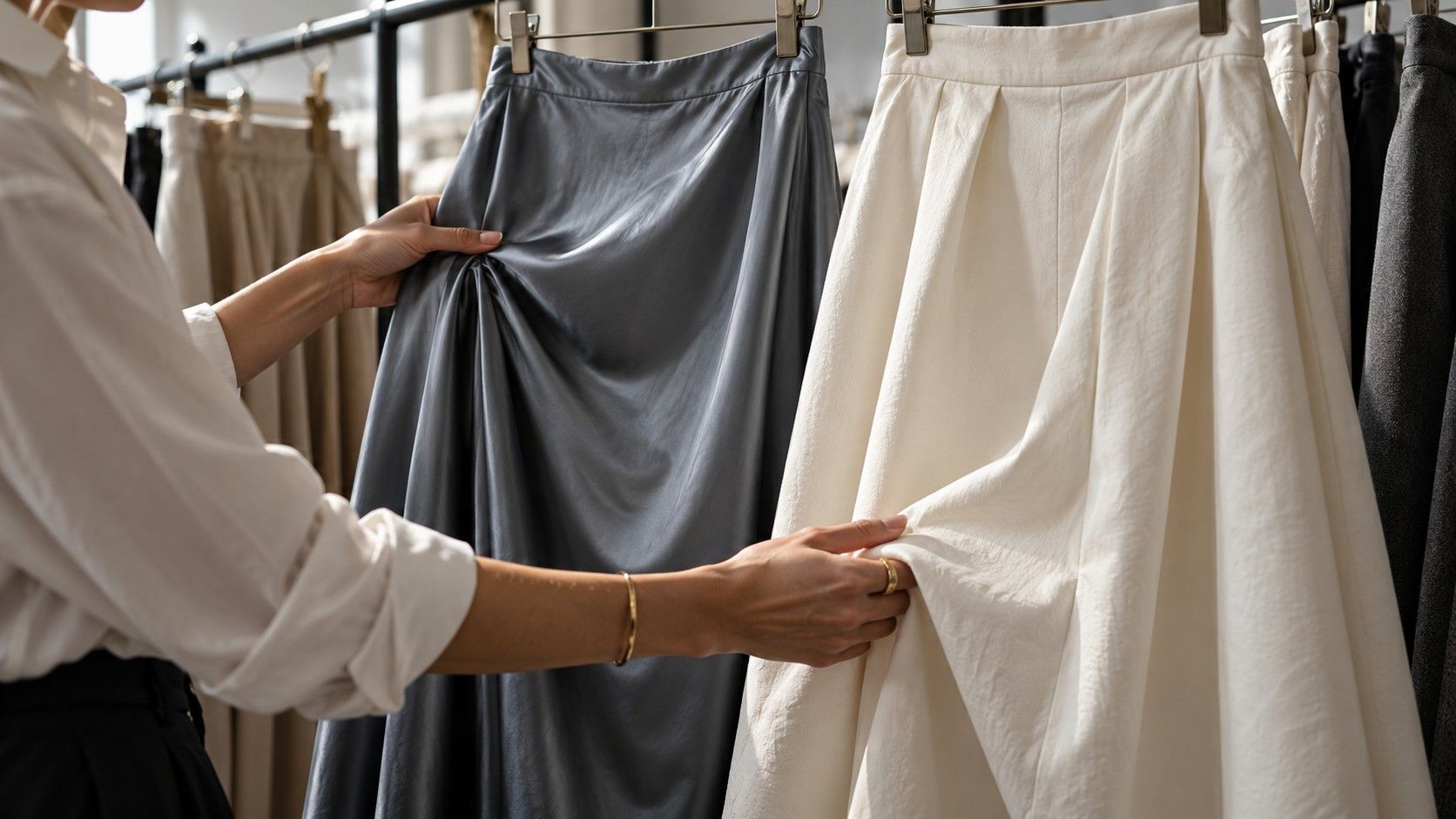
Drape describes how a fabric hangs and forms folds. A crisp woven cotton may hold a boxier outline than a fluid woven fabric, even when both shirts share a similar pattern. That difference does not mean either fabric is better. It changes the visual effect and the practical feel. Decide whether you want a top to stand away, fall close, swing as you walk or hold a defined edge.
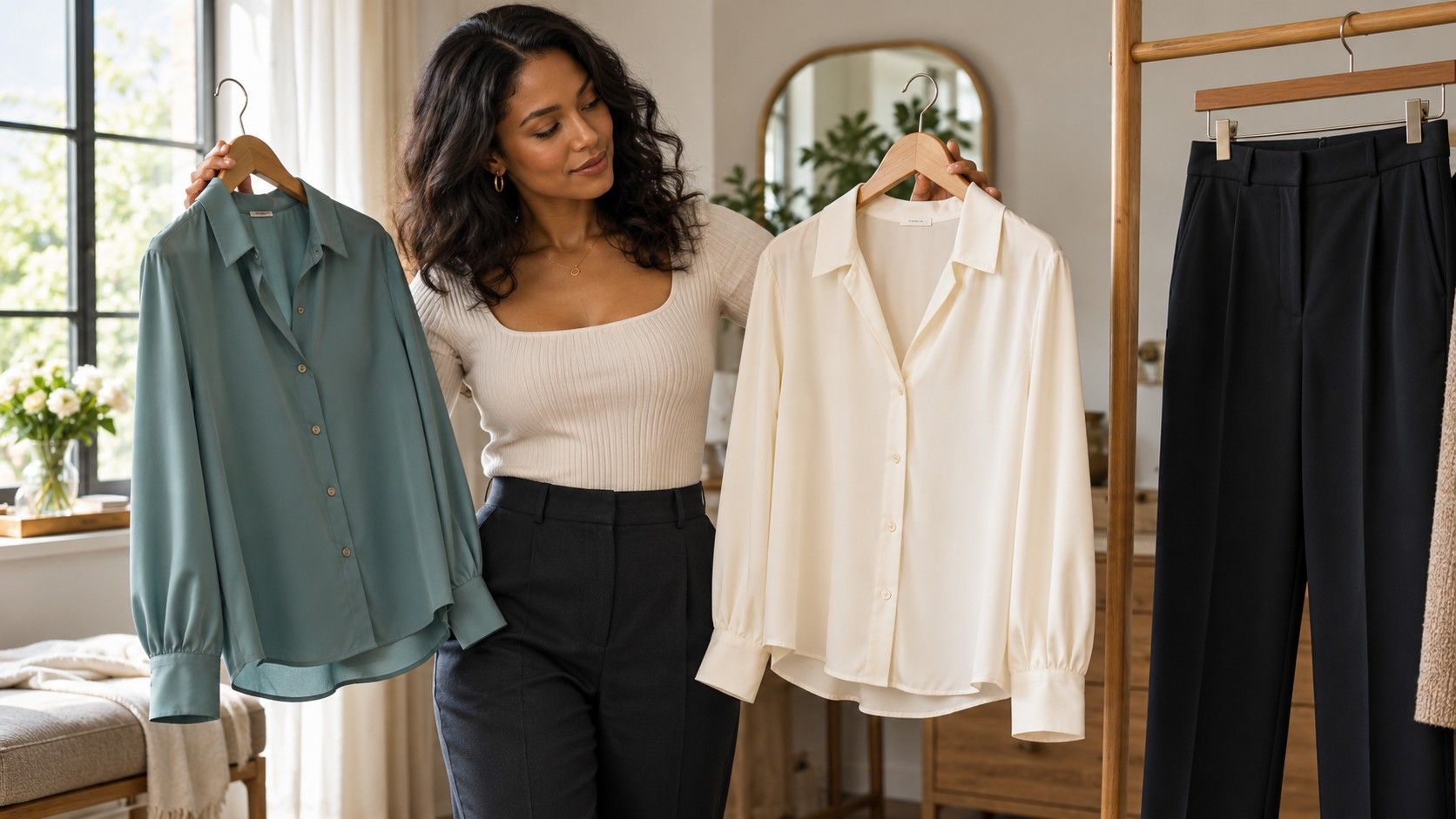
If you have two similar garments, hang them side by side first. Notice the shape of the empty sleeves and the folds below the hanger. Then try each with the same trousers and underwear. Keep the rest of the outfit stable so you can see the fabric's contribution. Garments with different seams or lengths are still worth comparing, but do not attribute every difference to the material alone.
A fiber label provides only part of the story. Cotton can become a stiff canvas, a light voile or a stretchy jersey; different constructions have very different behavior. Read the composition, then handle the garment and examine how it is made. A product description that promises “beautiful drape” cannot tell you how the item will interact with your waistband, jacket or everyday movement.
Watch where the garment hangs freely and where it catches
Put the garment on without immediately smoothing it into position. Let it settle, take a few steps and look at the side seams. Does the fabric fall freely from the shoulder, or catch at the bust, waist or hip? A place where the cloth stops can create folds above it. That is useful information about the relationship between garment and wearer, not a reason to judge a body part.
Try releasing one possible obstruction. Untuck a blouse, remove a belt or compare the same skirt with a smoother base layer. If the folds change, you have learned something about friction or the way the garment is held. If they remain, compare another size or cut. Repeated tugging is a poor long-term solution when the item needs more room or a different construction.
Look for changes after sitting as well as standing. A fluid skirt may cling after contact with a chair; a stiff trouser front may crease when bent. Some creasing is ordinary. The useful question is whether the garment remains comfortable and whether you like its appearance during real use. A perfectly arranged mirror image can hide how much adjustment the outfit requires through the day.
Test weight, thickness and stretch separately
A heavy fabric can have fluid drape, while a light fabric can feel crisp. Thickness, weight and flexibility are related in some garments but are not interchangeable. Lift the hem and let it fall. Does it drop into a broad fold or spring outward? Then feel the material between your fingers. These observations help explain why a garment with a fine surface can still create a substantial outline.
Stretch adds another question. A knit can allow movement yet cling more than you prefer; a woven garment with little stretch may be comfortable if it has enough ease. Check how the garment recovers after gentle movement rather than pulling hard on it. A stretched elbow or seat that remains baggy can affect the outline after wear, even when the item looks smooth at the start of the day.
| What you observe | Comparison to try | What to notice |
|---|---|---|
| A shirt stands away from the waist | A similar shirt in a more fluid fabric | Whether you prefer the held shape or softer folds |
| A skirt catches over another layer | A smoother compatible base layer | Whether friction changes how the hem falls |
| A knit feels restrictive despite stretching | A roomier size or different construction | Pressure during sitting and reaching |
| A trouser leg collapses around the ankle | A temporary hem adjustment with safe clips while standing | Whether length contributes to the folds |
When shopping online, use garment measurements and fabric details together. A photograph may show fabric clipped behind the model or arranged for one pose, so inspect several views and any movement video available. If the information is thin, check the return policy before ordering. The aim is to reduce guesswork, not to identify an ideal fiber from its name alone.
Look inside: lining, seams and finish can change the result
Turn the garment inside out if you own it or are permitted to inspect it. A lining may help a skirt move over tights, but a tight lining can restrict a garment whose outer layer has enough room. Reach and sit while wearing a lined jacket. If the outer fabric appears relaxed yet movement feels limited, the inner construction deserves attention. Do not assume buying a larger outer silhouette solves every internal fit issue.
Seams also shape fabric. Darts, curved panels, pleats and gathers redistribute cloth in different ways. Compare a blouse with darts to a straight-cut shirt before deciding that all versions of a fabric are unsuitable. A seam that twists can indicate several possibilities, including cut, fit or construction. Try another example of the garment where available rather than making a confident diagnosis from one fold.
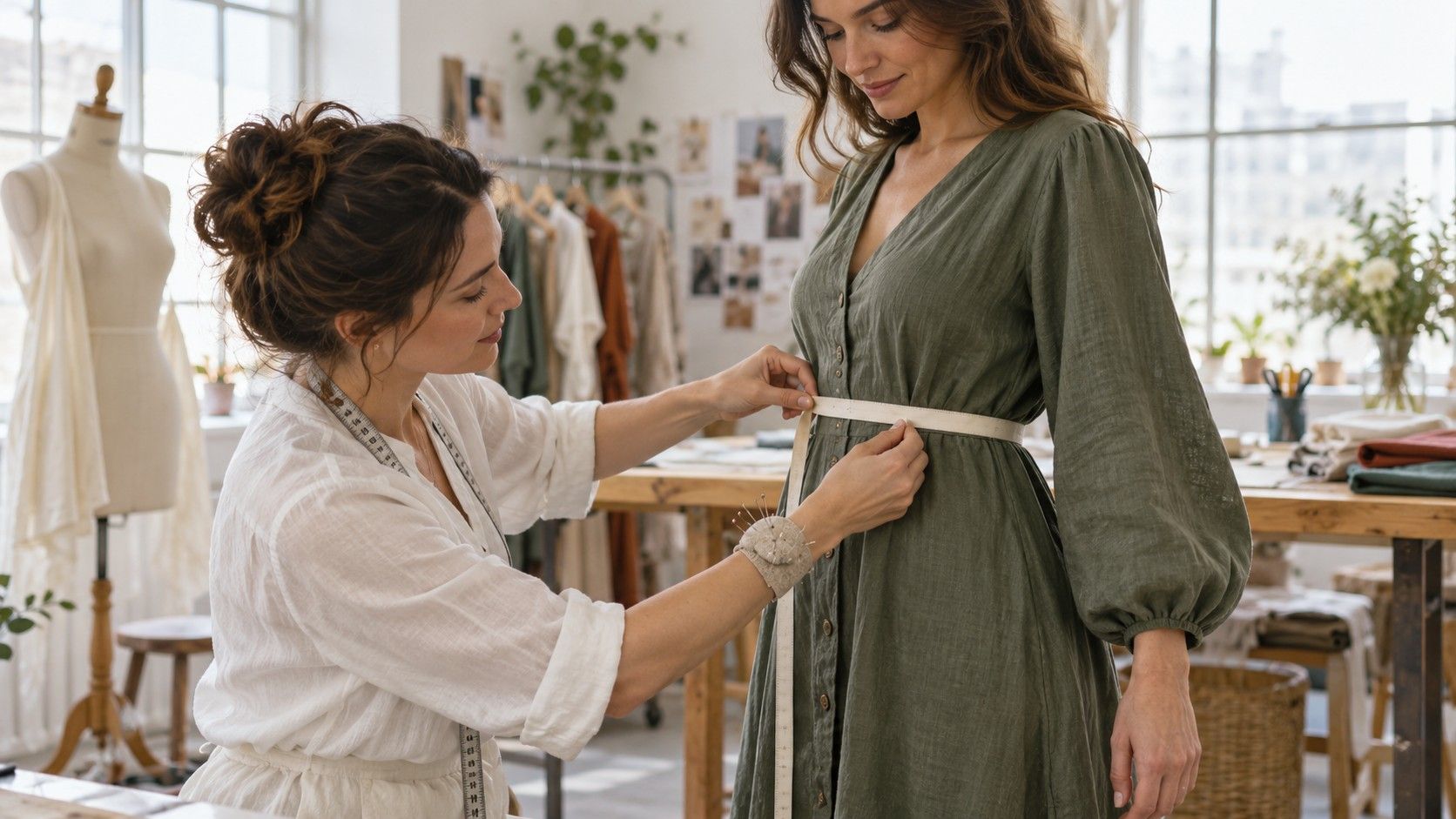
A hem adds weight and can influence how the lower edge moves. A broad turned hem, a facing or a heavy trim may hold an edge differently from a narrow finish. If a dress swings oddly at the bottom, look for this detail. Before cutting or altering it, ask a tailor how the change may affect the fall. Shortening a garment changes more than the position of its final edge.
See what happens when fabrics meet in an outfit
A fabric that feels easy alone may behave differently under another layer. Try your blouse beneath the actual jacket you intend to wear. Check the upper arm, cuff and back after reaching forward. Thick or textured sleeves may bunch inside a narrow jacket sleeve, while a smoother blouse may slide more easily. The outer jacket does not need to be visually loose to provide useful movement, but it must have room for its intended layers.
At the waist, compare a full tuck, an untucked hem and a different top if you have one. A bulky tuck can create an outline you dislike without saying anything about the suitability of your body for the trousers. Do not force more cloth into a fitted waistband than it comfortably holds. A shorter top or less bulky fabric may achieve the same outfit idea with fewer adjustments.
Color and print can make folds more or less noticeable. A shiny surface may emphasize changing planes; a matte textured fabric can create a different impression. Assess the shape in ordinary light and from a normal distance. Zoomed photographs invite attention to every wrinkle, even when the complete outfit looks and feels exactly as you hoped.
Choose the fabric for the day you will actually have
Consider temperature, sitting time, walking and care before buying. A fluid skirt may be pleasant for an evening meal but need different handling on a windy commute. A substantial trouser fabric may hold a defined line while feeling too warm in your office. Breathability depends on construction and finish as well as fiber, so combine label information with your own experience of similar garments.
Read care instructions before committing. A piece that needs more attention than you can give it may spend most of its time unworn. Ask whether you are willing to press the fabric, manage visible creasing or pay for the recommended cleaning. If you are experimenting with an unfamiliar material, one returnable item is a more informative purchase than several pieces chosen from a type-based shopping list.
Keep a note after wearing it: “falls smoothly over these trousers, sleeves bunch under coat, comfortable after two hours seated.” That description guides the next comparison. You may prefer fluid tops with firmer trousers, or a crisp shirt over a softer skirt. The combination can change with the occasion. Understanding drape gives you more choices without requiring a permanent body category.